

Balcony grout has a tough job. It sits in full sun, gets soaked by rain, then dries out and heats up again, day after day. Balcony grout fails faster than indoor grout because of temperature swings, water sitting in the joints and movement where tiles meet walls and doors. Epoxy grout and flexible silicone at the edges last far longer outdoors.
Here's why balcony grout breaks down, and how to replace it so it holds up.
Balcony grout cracking or crumbling?
Send us a photo on WhatsApp and we'll tell you what it needs.
Why Balcony Grout Fails
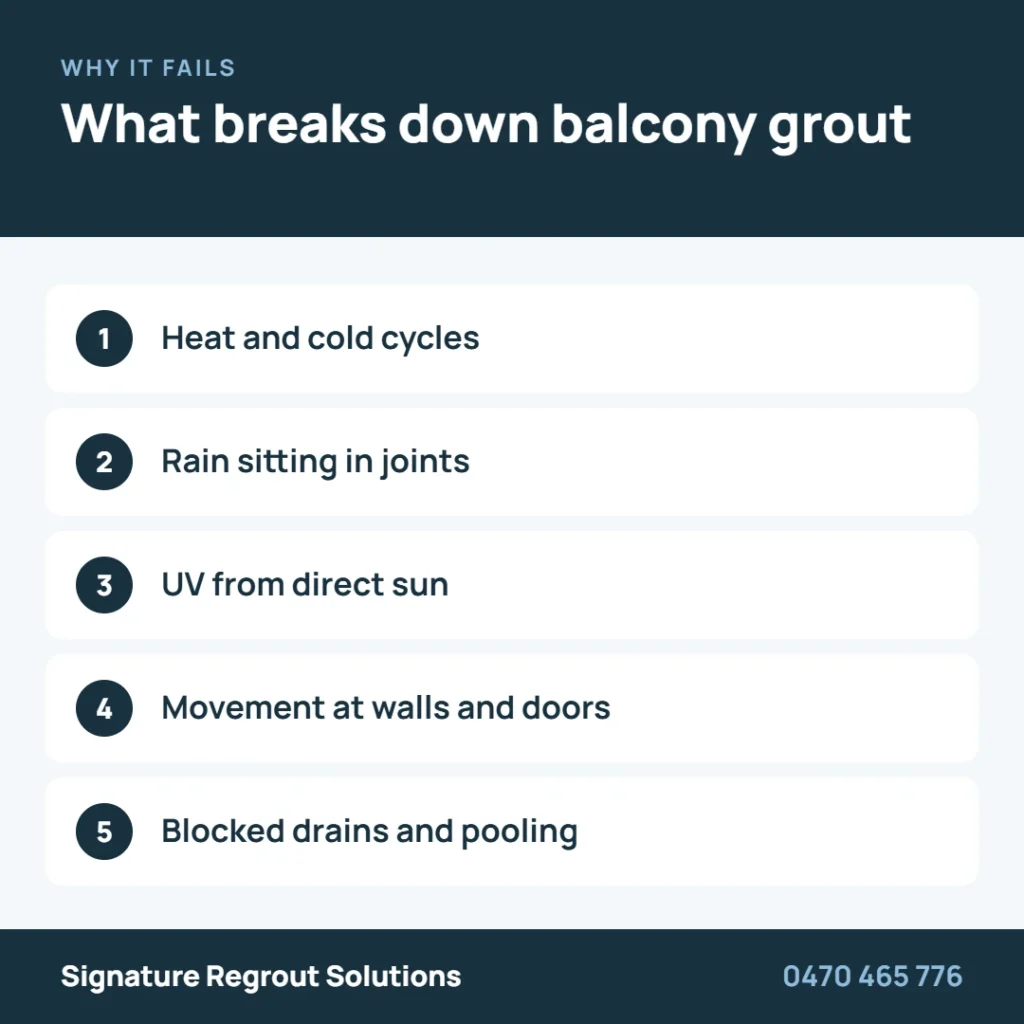
1. Heat and cold. Tiles expand in the sun and shrink when a cold change comes through. Rigid cement grout cracks under that constant movement.
2. Water in the joints. Rain soaks into porous balcony grout and sits there, slowly breaking it down.
3. UV exposure. Direct sun dries out and weakens cement grout over time.
4. Edge movement. Where tiles meet walls, door sills and balustrades, the joint moves most. Grout there cracks first.
5. Poor drainage. Pooling water keeps the grout wet for longer and pushes it into every crack.
Signs Your Balcony Grout Needs Replacing
- Cracks along grout lines, especially near the door
- Grout that is crumbly, sandy or missing
- White powder on the tiles or grout, called efflorescence
- Dark, stained grout that stays wet long after rain
- Stains on the ceiling of the room or unit below
That white powder is a strong clue. Our guide to efflorescence on tiles explains what it means, and our guide to why balconies leak covers the bigger picture.
Which Grout Lasts Best Outdoors?
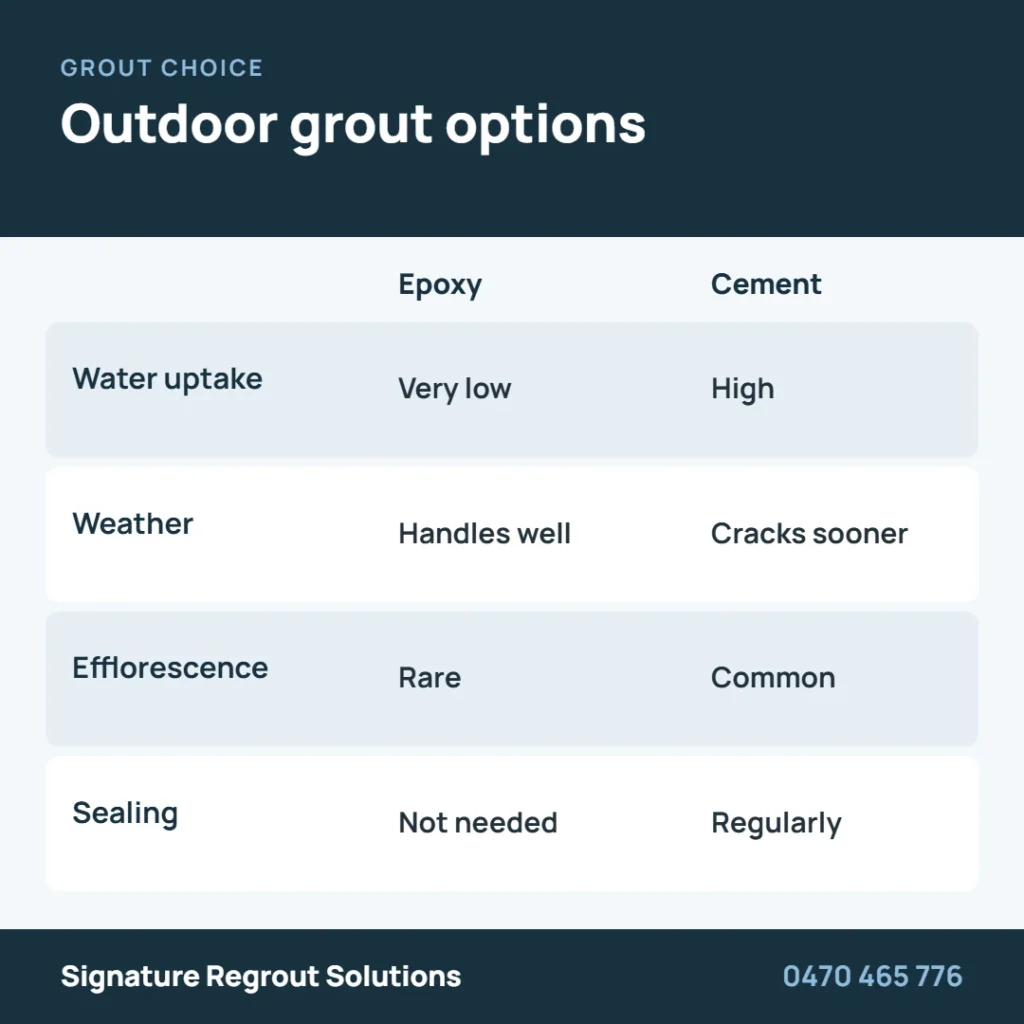
| Epoxy grout | Cement grout | |
|---|---|---|
| Water absorption | Very low | High |
| Handles weather | Well | Cracks sooner |
| Efflorescence | Rarely | Common |
| Sealing | Not needed | Regularly |
For most balconies, epoxy grout is the better choice. It barely absorbs water, so rain can't soak in and carry salts to the surface. Corners and edges still need flexible silicone, because no grout handles that movement.
Want your balcony grout replaced properly?
We'll inspect the grout, silicone and drainage and give you a clear quote.
How Balcony Grout Is Replaced
- Check the tiles for hollow spots and cracks.
- Cut the old balcony grout out to an even depth.
- Clean the joints and remove salts and dirt.
- Regrout, usually with epoxy.
- Seal the edges, door sill and balustrade bases with silicone.
- Check drains and the fall of the surface.
Our balcony regrouting page shows how we do it across Melbourne.
When New Grout Isn't Enough
If the waterproofing membrane under the tiles has failed, new balcony grout won't stop a leak on its own. Ongoing damp below after regrouting, loose tiles across the balcony or rotting timber framing all point to a bigger problem. The Building and Plumbing Commission explains how waterproofing is meant to work. At Signature Regrout Solutions, we'll tell you plainly if that's what we find.
Apartments and Older Homes
In apartment buildings, balcony repairs can involve the owners corporation, especially if water is reaching another unit. Check the rules for your building and talk to your strata manager before booking, and keep photos of the damage.
In older Melbourne homes, front porches and back terraces often have grout that has never been replaced. Decades of weather leave it crumbly and porous. Replacing balcony grout and outdoor grout on those areas makes a big difference to how the entrance looks, and stops water creeping under the tiles.
Colour Choices Outdoors
Outdoor tiles pick up dust, leaves and dirt, so mid-grey or darker shades hide wear best. Very light grout outdoors tends to look patchy quickly. Epoxy holds its colour better in the sun than cement grout, which can fade unevenly.
Looking After Outdoor Grout
Sweep the balcony regularly so dirt doesn't sit in the joints. Clear drains of leaves before winter. Move pot plants onto stands so water doesn't pool underneath. Check the silicone at the door and walls each spring, and fix small gaps early. Those habits add years to new grout.
Quick Questions
How long does balcony grout last?
It depends on exposure and the grout used. Epoxy usually lasts far longer outdoors than cement grout.
Can I pressure-wash balcony grout?
Gently, on sound grout only. Pressure-washing cracked grout pushes water further in.
Is regrouting a balcony a strata issue?
In apartments it can be. Check your owners corporation rules before booking.
The Bottom Line
Balcony grout takes a beating. Replace failing grout with epoxy, seal the edges with silicone and keep the drains clear, and your balcony will stay tidy and dry for much longer.
Ready to fix your balcony grout?
Send a photo on WhatsApp or give us a call for an honest answer.