
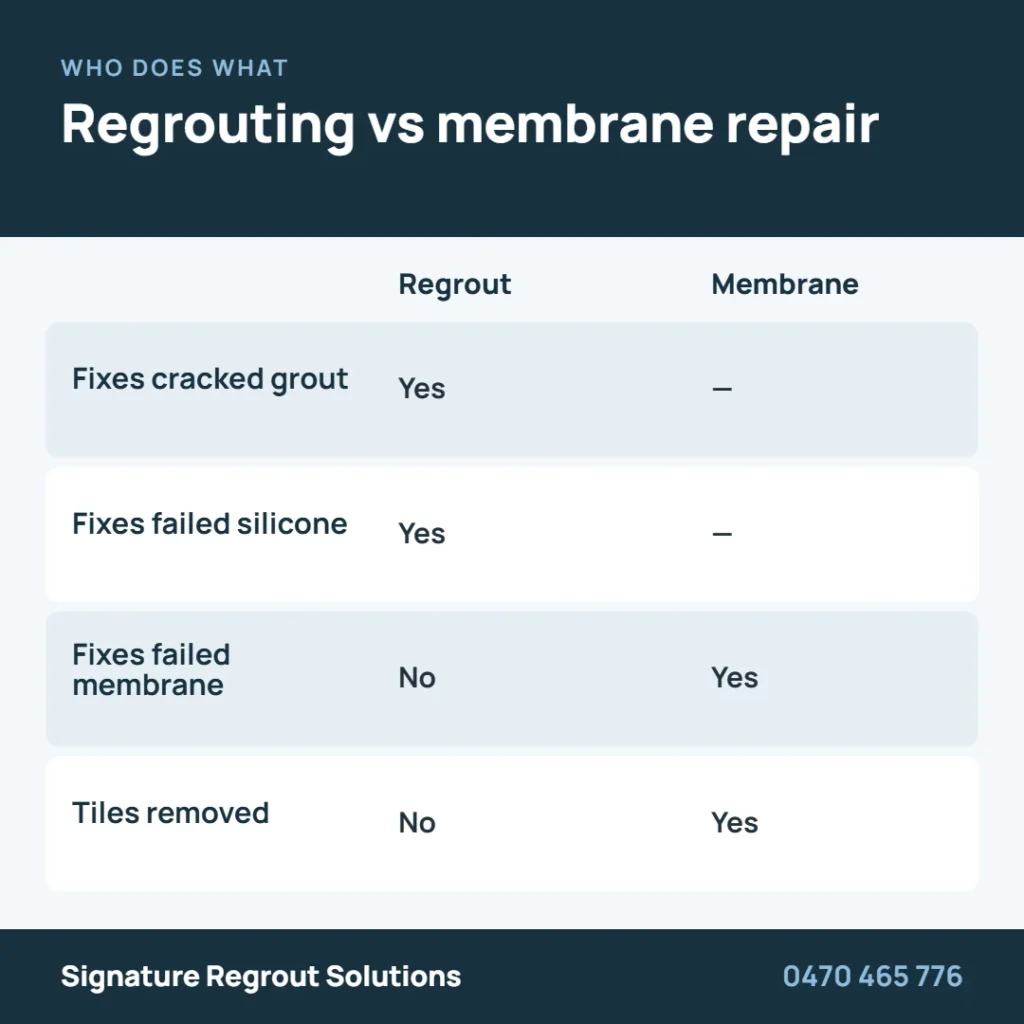
It's a common question, and the answer surprises people. Regrouting doesn't create shower waterproofing on its own. The waterproofing is a membrane under the tiles. What regrouting does is stop water getting through the grout and silicone to that membrane, which is where most leaks start.
Understanding how shower waterproofing actually works helps you choose the right repair, and avoid paying for one you don't need.
Not sure if your shower needs regrouting or waterproofing?
Send us photos on WhatsApp and we'll tell you what they point to.
How Shower Waterproofing Works
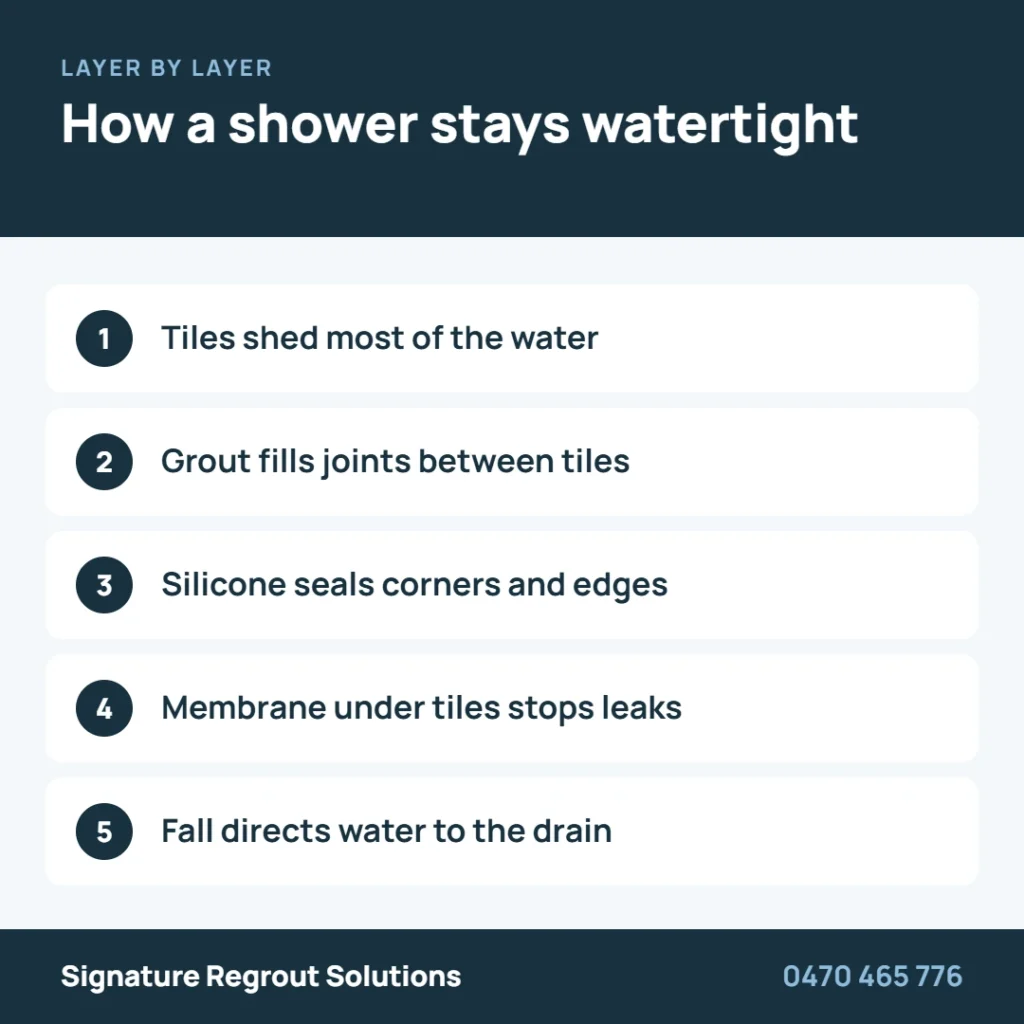
A shower is built in layers, and each one has a job.
- Tiles shed most of the water.
- Grout fills the joints between tiles.
- Silicone seals corners, edges and the screen, where things move.
- The membrane under the tiles stops water reaching the walls and floor.
- The fall of the floor sends water to the drain.
The membrane is the true shower waterproofing. Tiles and grout protect it. The Building and Plumbing Commission has a clear overview of how wet areas are meant to be waterproofed.
What Regrouting Actually Does
Regrouting replaces cracked, porous or missing grout so water stays on the surface and runs to the drain. With new silicone in the corners, it closes the gaps that let water reach the membrane. If those gaps were causing the leak, regrouting fixes it.
Epoxy grout helps even more, because it barely absorbs water. Our guide on whether epoxy grout is worth it explains why.
When the Membrane Is the Problem
If the membrane itself has failed, no amount of grout will stop a leak, because the shower waterproofing is gone. Signs include damp that continues after the grout and silicone are replaced, tiles that are loose across the floor, and damage that keeps spreading. That needs the tiles lifted and the shower waterproofing redone, which is a much bigger job.
Want to know what your shower really needs?
We'll check the grout, silicone and tiles and give you a clear quote before any work starts.
How Grout Protects Shower Waterproofing
Think of the membrane as the roof of a house and the grout and silicone as the gutters. If the gutters fail, water pours where it shouldn't, and the roof takes more strain than it was built for. In the same way, cracked grout lets water sit on the membrane day after day. Even good shower waterproofing doesn't like being permanently wet.
Keeping the grout and silicone in good shape means water runs across the tiles and down the drain instead. That's why regrouting is often the most cost-effective way to protect shower waterproofing in an older bathroom.
Why Grout and Silicone Fail Before Shower Waterproofing
Membranes are protected from wear. Grout and silicone are not. They take water, soap, cleaning products and movement every day. Over time grout cracks and silicone peels. That's why most leaks begin at the surface, and why fixing the surface is the sensible first step. Our guide on how to fix a leaking shower without removing tiles explains the process.
Signs Your Shower Waterproofing Is Under Strain
These signs don't always mean the shower waterproofing has failed, but they mean water is getting where it shouldn't:
- Cracked or missing grout on the shower floor
- Silicone that's lifting at the base or corners
- Swollen skirting or bubbling paint outside the shower
- Stains on the ceiling below
- A musty smell that won't clear
Our guide to the signs of a shower leak covers each one.
At Signature Regrout Solutions, we always look for the simple cause first before blaming the shower waterproofing. If regrouting and resealing will fix it, that's what we'll recommend. If the shower waterproofing has failed underneath, we'll say so.
New Showers and Renovations
In a brand-new shower, the membrane is installed before any tiles go on, and it should be checked before tiling. If you're having a bathroom renovated, ask your builder how the waterproofing will be done and certified. For existing showers, keeping grout and silicone in good shape is what protects that membrane for years.
Quick Questions
Is grout waterproof?
Cement grout is porous. Epoxy grout is highly water resistant, but neither replaces a membrane.
Can silicone waterproof a shower?
Silicone seals movement joints. It's part of keeping water out, not a replacement for the membrane.
How do I know if the membrane has failed?
If damp continues after the grout and silicone are properly replaced, the membrane is the likely cause.
The Bottom Line
Regrouting doesn't replace shower waterproofing, but it protects it. Fix the grout and silicone first, and you'll stop most leaks before they reach the membrane.
Worried about your shower waterproofing?
Send a photo on WhatsApp or give us a call. We'll tell you what's really going on.