

A brown stain on the ceiling under a balcony is easy to ignore until it isn't. Most balcony leak problems come from cracked grout, failed silicone, poor drainage or a waterproofing membrane that has broken down under the tiles. Working out which one you have is the first step, because the fixes are very different.
Here's how to narrow down a balcony leak, what you can do straight away, and when it needs more than new grout.

Got a balcony leak?
Send us photos on WhatsApp of the balcony and any stains below. We'll tell you what they point to.
The Most Common Causes of a Balcony Leak
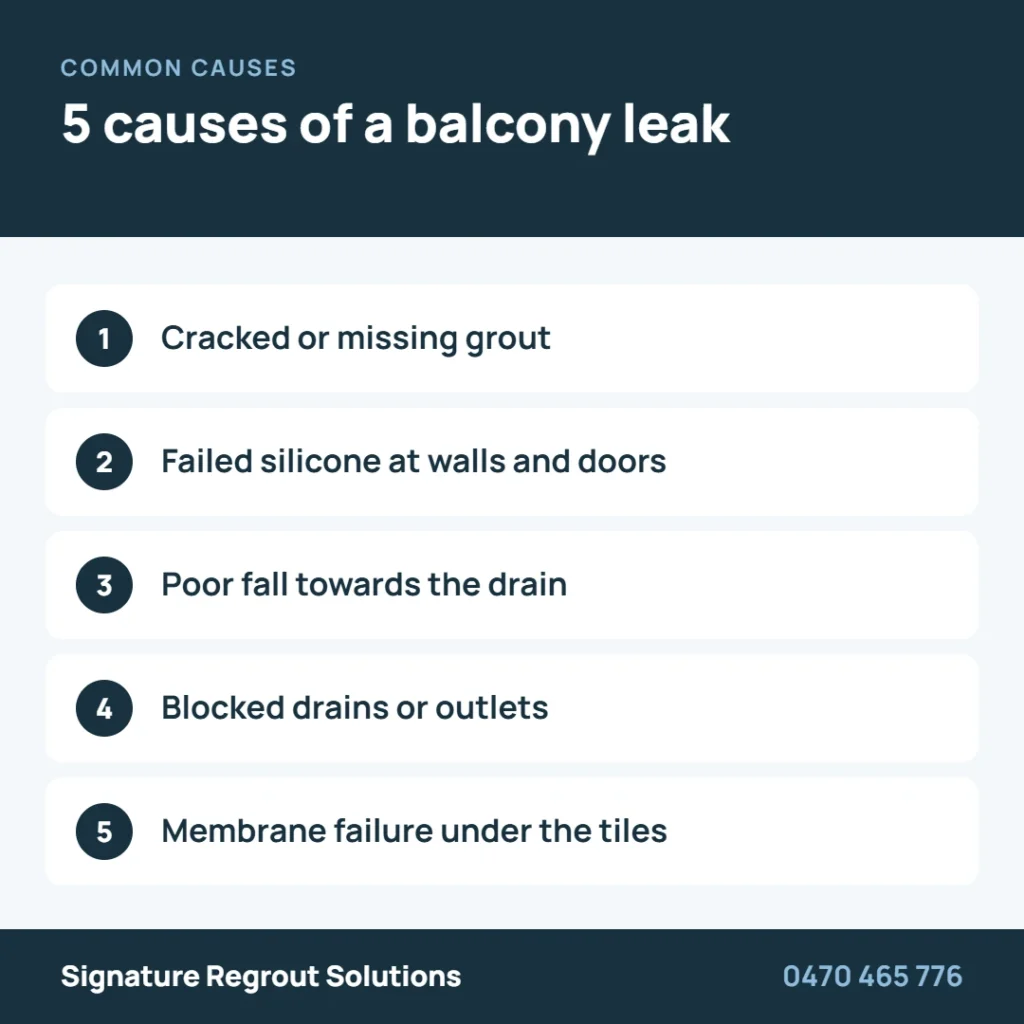
1. Cracked or missing grout. Balconies deal with full sun, rain and big temperature swings. Cement grout cracks over time, and every crack lets water through to the layers underneath.
2. Failed silicone. The joints where tiles meet walls, door frames and balustrades need flexible silicone. When it peels or splits, water runs straight in.
3. Poor drainage fall. A balcony should slope gently towards the drain. If water pools after rain, it sits on the grout and finds its way in.
4. Blocked drains or outlets. Leaves and dirt can block balcony drains, so water backs up against the door sill.
5. Membrane failure. The waterproofing membrane under the tiles is the last line of defence, and the Building and Plumbing Commission explains how waterproofing is meant to work. Once it fails, a balcony leak usually needs a bigger repair.
Signs to Look For
| Sign | Where to look |
|---|---|
| Ceiling stains or bubbling paint | Room or unit directly below |
| White powder on tiles or grout | Balcony surface |
| Pooling water after rain | Balcony floor |
| Cracked grout or gaps in silicone | Joints, wall edges, door sill |
| Loose or hollow tiles | Tap-test across the balcony |
White powder on the tiles is a strong clue. It's salt carried up by water moving through the grout and bedding, which means moisture is getting in even if nothing shows downstairs yet.

Can a Balcony Leak Be Fixed Without Removing Tiles?
Often, yes, if the water is getting in through the grout and silicone rather than a failed membrane. Cutting out the old grout, regrouting with a durable grout such as epoxy, and replacing the silicone can stop a balcony leak at the source.
If the membrane has failed, regrouting alone won't fix it. We'll tell you honestly if that's what we find, so you don't pay for a regrout that can't solve the problem. Our balcony regrouting page explains how we fix grout and silicone failures on balconies across Melbourne.
Want your balcony leak checked?
We'll inspect the grout, silicone and drainage and give you a clear quote before any work starts.
Why Balconies Fail Faster Than Showers
A shower gets wet every day, but a balcony takes a harder beating. Summer sun heats the tiles, a cold change cools them quickly, and rain sits in the joints. That constant movement cracks rigid cement grout and pulls silicone away from walls and door frames.
Older Melbourne apartments often have balconies that were grouted with standard cement grout and never resealed. After enough seasons, a balcony leak is almost inevitable unless the grout and silicone are kept in good shape. Checking them each spring is a simple habit that catches a balcony leak before it reaches the unit below.
Apartments and Owners Corporations
If you live in an apartment, a balcony leak that affects the unit below can involve the owners corporation. Who is responsible depends on your building's plan of subdivision and rules, so check with your strata manager before booking repairs. Photos of the stains and the balcony surface help everyone work out what's going on.

How to Slow a Balcony Leak Now
- Clear the drains of leaves and dirt.
- Sweep standing water to the drain after rain.
- Move pot plants off the tiles, because water pools under them.
- Photograph stains below so you can track changes.
- Avoid pressure-washing cracked grout, which pushes water further in.
Quick Questions
Does epoxy grout help on balconies?
Yes. It doesn't absorb water like cement grout, so it handles rain and sun much better. Our guide to epoxy grout vs regular grout explains why.
Can I just seal over the tiles?
Clear sealers can help for a while on sound grout, but they don't fix cracks, failed silicone or poor drainage.
How quickly should a balcony leak be fixed?
Soon. Water reaching the structure underneath leads to much bigger repairs over time.
The Bottom Line
Most balcony leak problems start small, at the grout and silicone. Catch it there and the fix is usually far simpler than you'd expect.
Seeing stains under your balcony?
Send a photo on WhatsApp or give us a call. We'll tell you what's causing your balcony leak.