
If you're weighing up epoxy against regular grout for a shower, here's the short answer. Epoxy grout is better for wet areas because it barely absorbs water, while regular grout is cheaper, easier to work with and still fine for walls and dry floors. The right pick depends on where the grout is going and how much cleaning you're happy to do.
We regrout showers across Melbourne with both, so here's how they actually compare once they're on the wall.
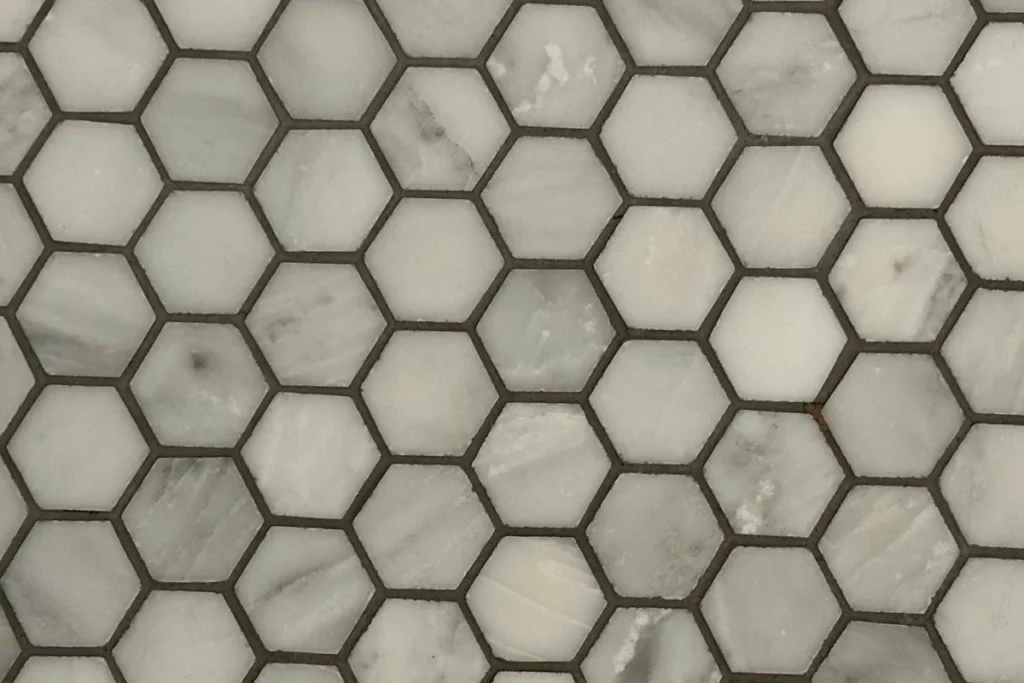
Not sure which grout your shower needs?
Send us a photo on WhatsApp. We'll tell you which grout suits it and why.
What Is Regular Grout?
Regular grout is cement-based: a mix of cement, fine sand and additives, mixed with water and pressed into the joints. Most Australian bathrooms built in the last few decades have it.
The thing to understand is that regular grout is porous. It takes in water, soap and body oils over time. That's why it darkens, stains and grows mould in a shower, even when you clean it often.
What Is Epoxy Grout?
Epoxy grout is made from epoxy resin and a hardener. Once it cures, it's dense and non-porous. Water, soap scum and mould sit on the surface instead of soaking in, so it wipes clean far more easily.
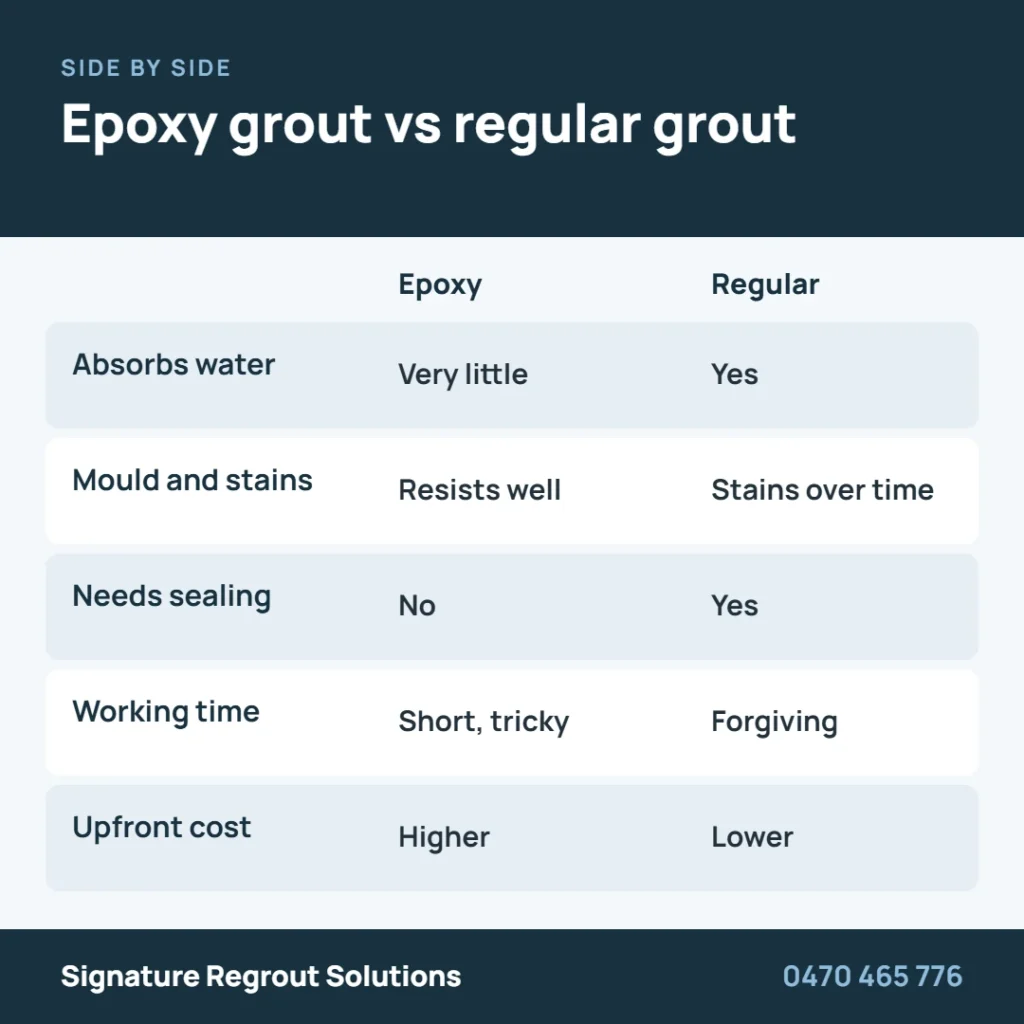
How They Compare
| Epoxy grout | Regular grout | |
|---|---|---|
| Water absorption | Very low | Absorbs water |
| Mould and stains | Resists both well | Stains over time |
| Sealing | Not needed | Should be sealed |
| Colour | Stays even | Can go patchy |
| Working time | Short and tricky | Forgiving |
| Upfront cost | Higher | Lower |
Is Epoxy Grout Waterproof?
Epoxy grout is water resistant, but it isn't a waterproofing system. It stops water soaking into the joints, which regular grout can't do. The membrane under the tiles is what actually protects the floor and walls. If that membrane has failed, new grout of any kind won't stop a leak. The Building and Plumbing Commission explains how wet areas are waterproofed, and our guide to the signs of a shower leak helps you spot trouble early.

When Regular Grout Still Makes Sense
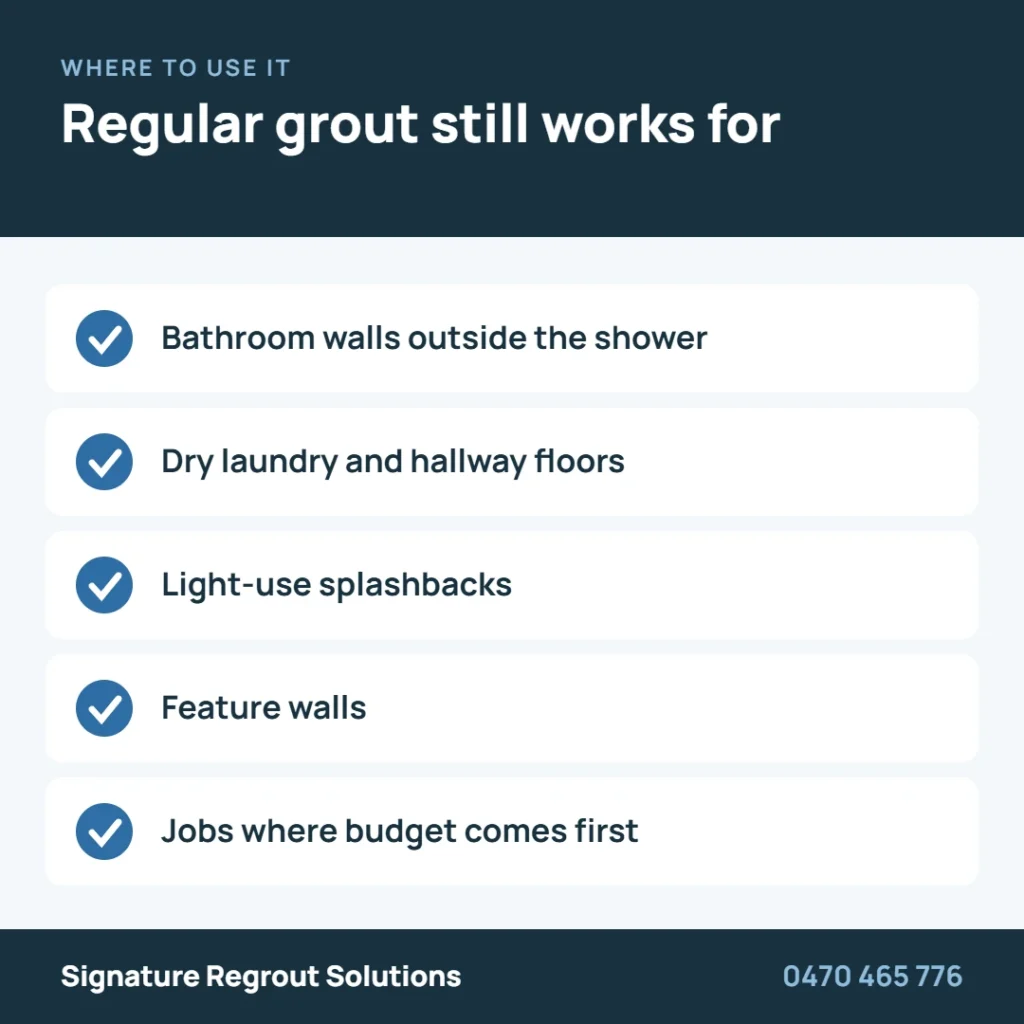
Cement grout isn't a bad product. It's just used in the wrong spot a lot. It suits bathroom walls outside the shower, dry laundry and hallway floors, light-use splashbacks, feature walls, and jobs where budget comes first.
If you choose regular grout for a shower, seal it once it has cured and reseal it every so often. That slows down staining and helps it last.
Why Most of Our Shower Regrouts Use Epoxy
In a shower, regular grout gets wet every day, and that's where it breaks down fastest. At Signature Regrout Solutions, we usually recommend epoxy for shower floors and the lower walls, because those areas take the most water and soap. Our epoxy shower regrouting page shows how we apply it.
The catch is installation. Epoxy sets quickly and leaves a haze on the tiles if it isn't cleaned off at the right moment, which is why DIY epoxy jobs often look patchy.
Thinking of switching from regular grout to epoxy?
We'll check your tiles and existing grout and give you a clear quote.
Does Grout Colour Matter?
It matters more than people expect. White cement grout looks crisp on day one, but in a shower it darkens unevenly as it absorbs soap and dirty water. Mid-grey hides wear far better on floors. Epoxy holds its colour much longer, so it's the better choice if you want white or a pale shade to stay that way.
Whatever colour you choose, match the silicone to it so the corners don't stand out. And if you're regrouting the whole shower, you're free to change colour completely, because all of the old grout comes out.
Can You Put Epoxy Over Regular Grout?
No. The old regular grout has to be cut out first. Epoxy needs a clean joint with enough depth to bond properly. Spread over old grout, it ends up too thin and lifts away. When we switch a shower to epoxy, every joint is cut out, vacuumed and cleaned before anything new goes in.
Quick Questions
Does epoxy cost more than regular grout?
Yes. The material costs more and takes longer to apply. It often pays off with less cleaning and no sealing.
Does regular grout need sealing?
It should be sealed once it cures. Sealing slows down staining and water absorption, but it wears off over time.
Can I use epoxy and regular grout in the same bathroom?
Yes. A common approach is epoxy in the shower and regular grout on the dry walls and floor.
The Bottom Line
For a shower, epoxy is usually worth the extra cost. For dry areas, regular grout does the job well. If you're unsure which suits your bathroom, a photo is usually enough for us to tell you.
Want to compare options for your shower?
Send a photo on WhatsApp or give us a call for an honest answer and a clear quote.