

You're cleaning the shower and spot a thin line running through the grout. Is it a big deal? Grout cracking in a shower should be fixed sooner rather than later, because every crack is a path for water to reach the tile adhesive and the waterproofing underneath. A single hairline crack isn't an emergency, but it rarely stays single for long.
Here's what causes grout cracking, how to tell how serious yours is, and how it should be fixed.

Found grout cracking in your shower?
Send us a photo on WhatsApp. We'll tell you how urgent it is.
What Causes Grout Cracking?
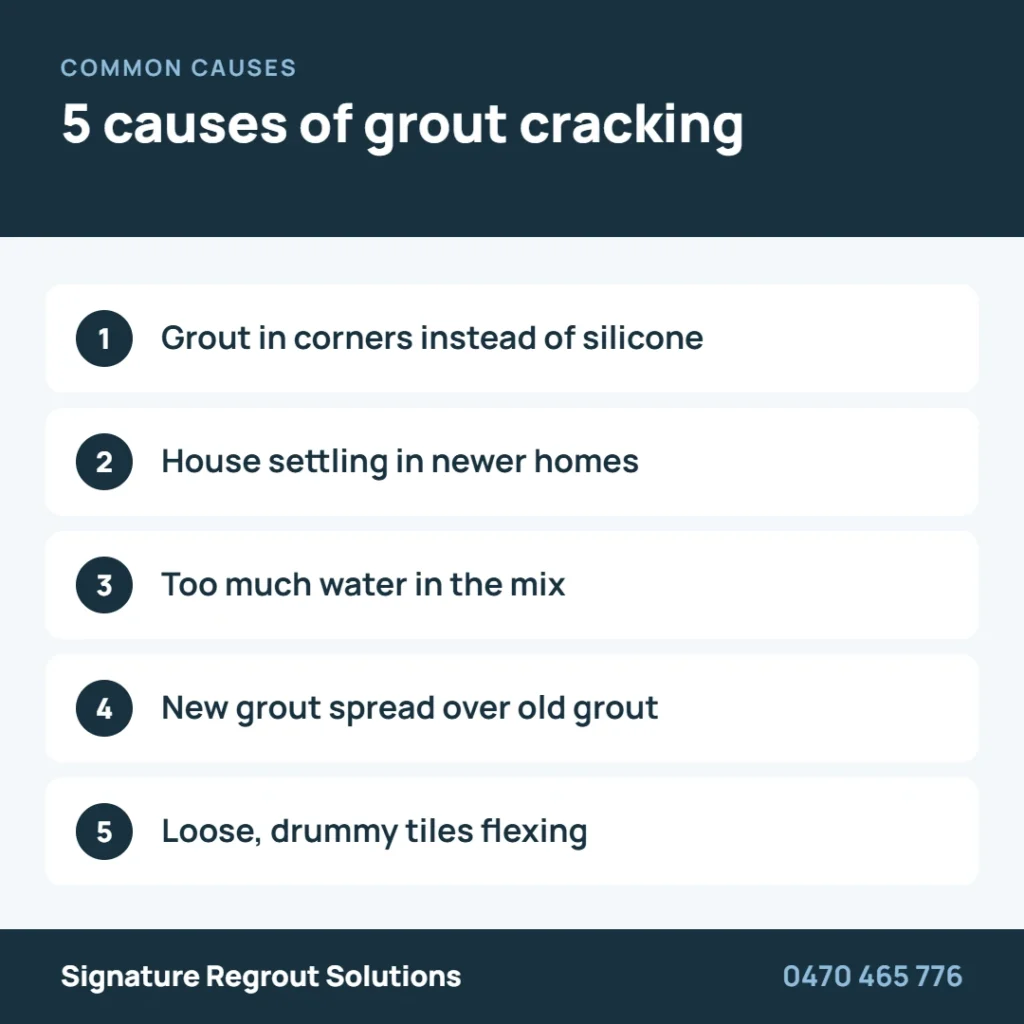
The most common causes are movement, grout in the wrong place, and grout that was mixed or applied badly. In more detail:
- Grouted corners. Where walls meet, or where the wall meets the floor, the joint moves slightly as the house heats, cools and settles. Grout is rigid, so it cracks. Those joints should be filled with flexible silicone.
- House settling. Newer homes in estates around Clyde North, Cranbourne and Pakenham often show grout cracking in the first few years.
- Too much water in the mix. Over-watered grout shrinks as it dries and ends up weaker.
- Grout that's too thin. New grout spread over old grout has nothing solid to grip, so it cracks and flakes.
- Drummy tiles. A tile that has come loose flexes underfoot and cracks the grout around it.
Is Grout Cracking a Problem?
In a shower, yes. Cement grout already absorbs some water. Once it cracks, water runs straight through the gap instead of slowly soaking in. Over time that can loosen tiles, cause mould behind the surface and put extra strain on the membrane.
On a dry wall or floor, grout cracking is mostly cosmetic. It's still worth fixing, but it isn't urgent. Keep an eye on it, though. If the cracks spread or tiles start to move, something underneath is changing.
Signs Water Is Already Getting In
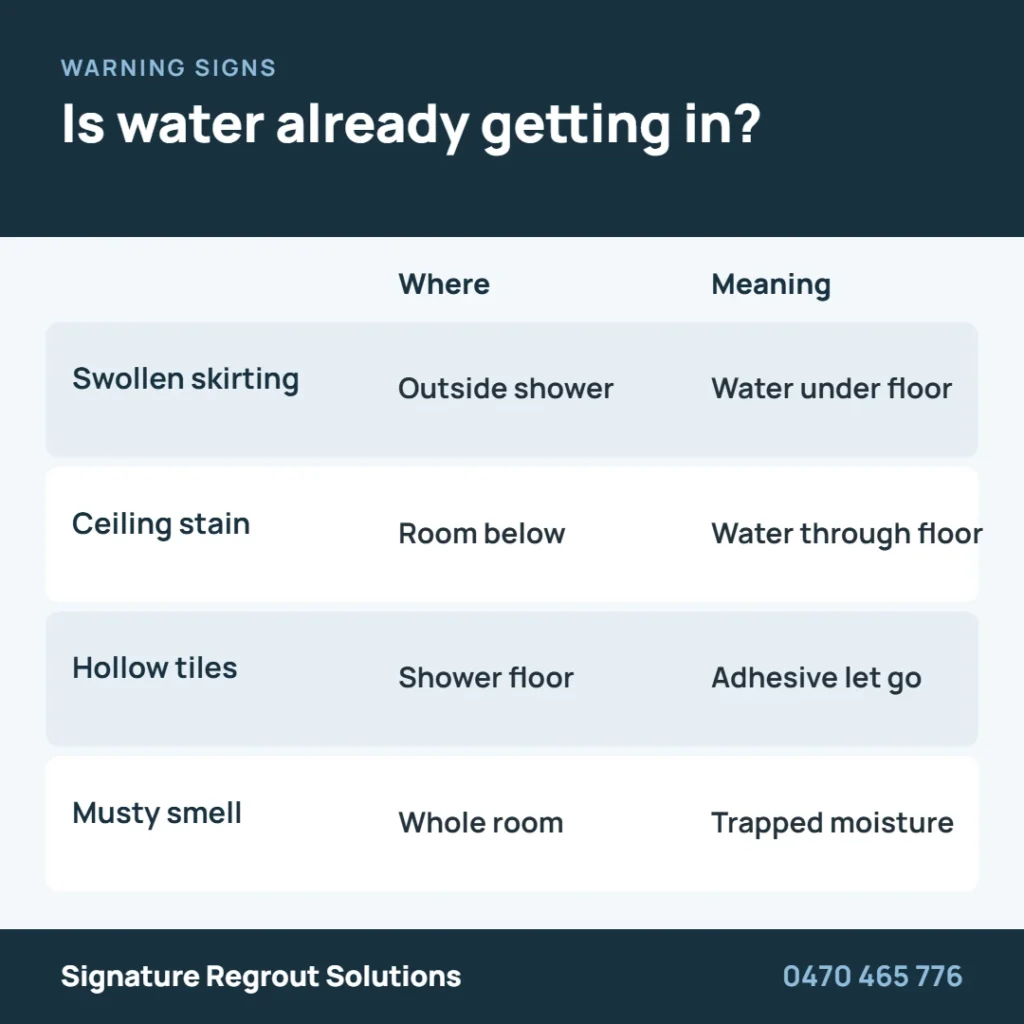
| Sign | What it can mean |
|---|---|
| Swollen skirting | Water travelling under the floor |
| Stain on the ceiling below | Water passing through the floor |
| Tiles that sound hollow | Adhesive has let go |
| Musty smell that won't clear | Moisture trapped behind tiles |
If you see any of these, read our guide to the signs of a shower leak first. New grout won't fix a failed membrane, and the Building and Plumbing Commission explains how wet-area waterproofing works.
Want grout cracking fixed properly?
We'll find out why it cracked, fix the cause and give you a clear quote before we start.
Preventing Grout Cracking After a Regrout
New grout lasts much longer when a few basics are right. Corners and changes of direction get silicone, never grout. The old grout is removed to a consistent depth so the new grout has something to grip. Loose tiles are fixed first. And the grout is mixed to the maker's instructions, not watered down to make it easier to spread.
After the job, give the grout its full curing time before heavy use, and keep the room ventilated. Those habits stop most grout cracking from returning.
Can You Just Fill the Crack?
Filling one crack can work on a dry wall, but in a shower it's usually short-lived. New grout pushed into a narrow crack doesn't bond well to old grout, and it won't fix whatever caused the grout cracking in the first place.
For small, isolated cracks, a partial repair can be fine. Our cracked grout repairs page explains when that makes sense. When several lines have cracked, or the cracks are on the shower floor, cutting the grout out and regrouting the area gives a far better result.
How We Fix Grout Cracking
At Signature Regrout Solutions, we always tap-test the tiles first, because a loose tile cracks new grout just as fast as the old. Then the process is:
- Find the cause, whether that's movement, loose tiles or water.
- Cut the cracked grout out to a proper depth.
- Clean the joints and treat any mould.
- Regrout, often with epoxy in the wettest areas.
- Replace corner joints with flexible silicone.
Our guide to epoxy grout vs regular grout explains why epoxy handles wet areas better.

Quick Questions
Why does grout cracking happen in shower corners?
Corners move slightly and rigid grout can't flex. Those joints should be siliconed, not grouted.
Is grout cracking on the shower floor worse than on the wall?
Usually, yes. The floor holds water and takes your weight, so cracks there let water in faster.
How quickly should I fix grout cracking?
In a shower, within weeks rather than months. The longer water gets in, the bigger the repair.
The Bottom Line
One hairline crack isn't a disaster, but grout cracking in a shower is a warning sign. Fix the cause, not just the crack, and it won't keep coming back.
Got grout cracking in your shower?
Send a photo on WhatsApp or give us a call. We'll tell you what caused it and how to fix it.