
Grout doesn't fail overnight. It wears down slowly, which is why most people don't notice until the shower looks tired or water starts showing up where it shouldn't. You need regrouting when grout is cracked, missing, crumbly, or full of mould that won't clean off, especially on the shower floor.
Here are the seven signs we look for, and a five-minute check you can do yourself.

Think you might need regrouting?
Send us a photo on WhatsApp and we'll tell you what we see.
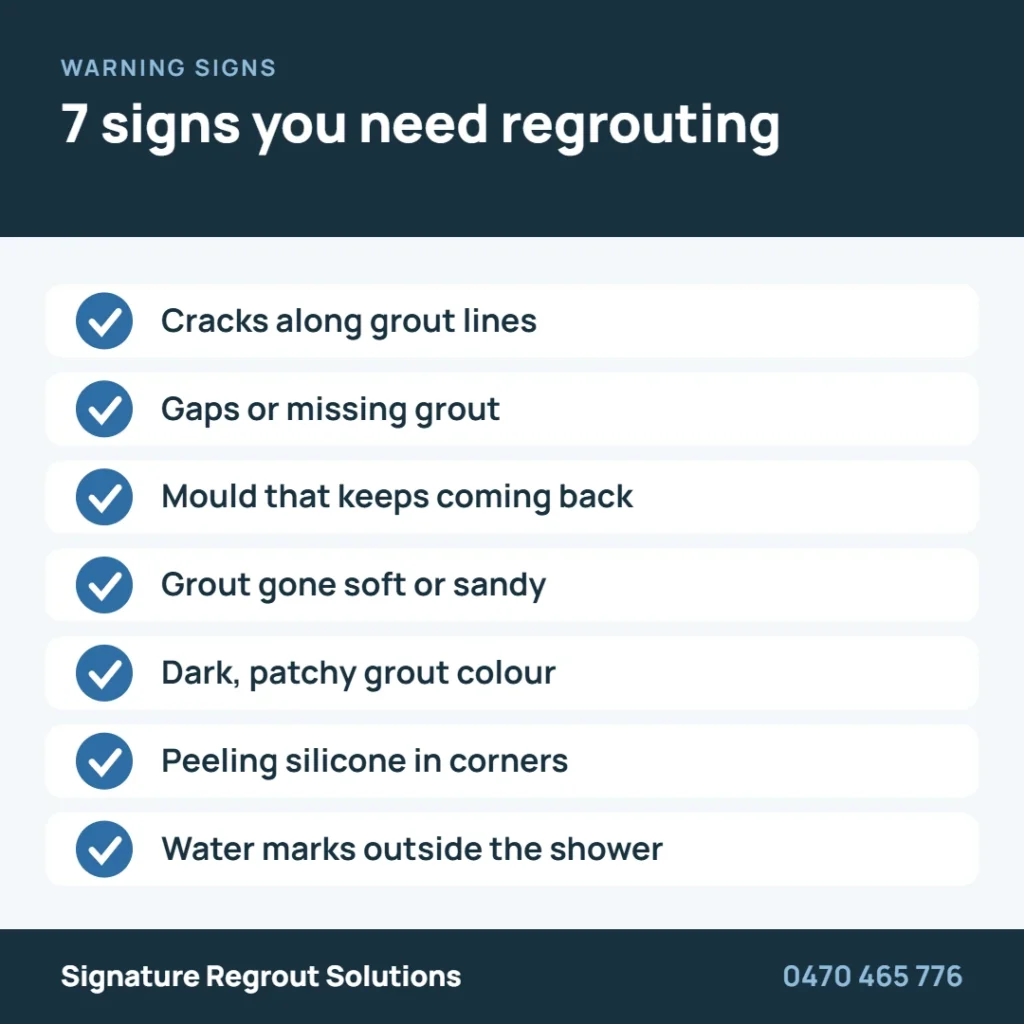
1. Cracks Along the Grout Lines
Hairline cracks are often the first sign you need regrouting, and they spread faster than most people expect. In a shower, every crack is a path for water. Our page on cracked grout repairs explains how small cracks are fixed.
2. Gaps or Missing Grout
If you can see gaps between tiles, water is going straight behind them. This is the clearest sign you need regrouting soon.
3. Mould That Keeps Coming Back
Mould that returns within days of cleaning is living inside the grout. Our guide to black mould in shower grout explains why cleaning stops working.
4. Grout That Feels Soft or Sandy
Run a key along the grout. If it scratches out or powders, it has broken down. When grout is this soft, you need regrouting rather than cleaning.
5. Dark or Patchy Colour
Grout that has gone dark in some areas and stayed light in others has been absorbing water unevenly. On its own this doesn't always mean you need regrouting, but it often means the surface has worn away.
6. Peeling or Mouldy Silicone
Silicone isn't grout, but when it fails in the corners, water gets in the same way. It's usually replaced at the same time. See our silicone replacement page.
7. Water Marks Outside the Shower
Swollen skirting, bubbling paint or a musty smell can mean water has already escaped. Read our guide to the signs of a shower leak before booking anything.
Ready to find out if you need regrouting?
We'll check the grout, silicone and tiles and give you a clear quote.
Why People Miss the Signs
Most people only look at grout when they clean, and by then they're focused on getting it white again, not on whether it's still sound. That's why so many showers need regrouting long before anyone books it. The grout looks a bit tired, then a bit dark, then one day there's a crack near the drain.
It also doesn't help that grout fails from the bottom up. The floor and the first row of wall tiles take the most water, so they wear out first, while the upper walls still look fine. If the top of your shower looks good but the floor doesn't, you may only need regrouting in the wettest areas, although doing the whole shower usually gives a better match.
Another reason the signs get missed is that bath mats, shampoo racks and shower caddies hide the worst spots. Move them once in a while and look underneath. If you're still not sure whether you need regrouting, a clear photo of the floor and corners tells us most of what we need.
What Happens If You Wait?
Waiting turns a grout job into a bigger repair. Water that gets behind tiles loosens the adhesive, and loose tiles crack new grout. It can also reach timber and plasterboard, where it causes swelling and mould. The Better Health Channel notes that damp indoor areas encourage mould growth.
A 5-Minute Check
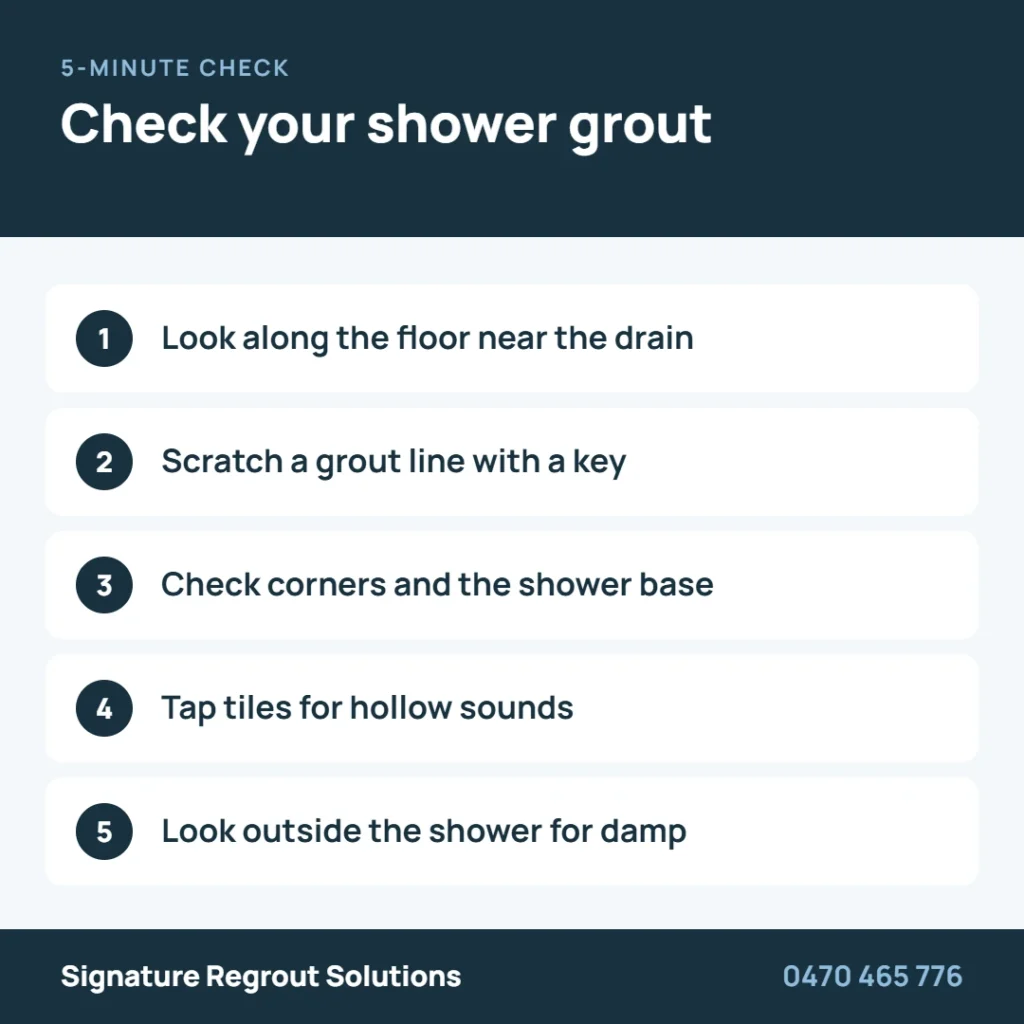
- Look along the shower floor near the drain.
- Scratch a grout line with a key.
- Check the corners and where the wall meets the floor.
- Tap the floor tiles and listen for hollow sounds.
- Check outside the shower for damp or swelling.
If two or more of these show problems, you probably need regrouting. If only one does, keep an eye on it and check again in a month. At Signature Regrout Solutions, we're happy to look at photos first and tell you honestly if it can wait.
Quick Questions
How often do showers need regrouting?
It depends on the grout, ventilation and cleaning. Cement grout in a busy shower usually needs attention sooner than epoxy.
If I need regrouting, can I just do the cracked parts?
Sometimes, but patches rarely match. In a shower, doing the whole area usually gives a better result.
Do I need regrouting if the grout is only stained?
Not always. Hard, stained grout can often be cleaned and sealed instead.
The Bottom Line
If you spot cracks, gaps, soft grout or mould that won't shift, you probably need regrouting, and the sooner the better. Acting early keeps the job quick and protects what's behind the tiles.
Seeing these signs in your shower?
Send a photo on WhatsApp or give us a call. We'll tell you what it needs.