
You scrub it, it looks better for a week, and then it's back. Black mould in shower grout is one of the most frustrating bathroom problems there is. If black mould wipes off and doesn't return quickly, it's on the surface and cleaning works. If it comes back within days, it's living inside the grout, and the grout needs replacing.
Here's how to tell which one you've got, and what actually works for each.

Fighting black mould in your shower?
Send us a photo on WhatsApp. We'll tell you if it can be cleaned or needs new grout.
Why Does Black Mould Grow in Grout?
Cement grout is porous, so it soaks up water, soap and body oils, which is exactly what black mould feeds on. A shower that stays damp between uses gives it everything it needs. Corners and the bottom rows of tiles are usually worst, because water sits there longest.
Over time the mould grows down into the grout rather than just sitting on top. That's the point where scrubbing stops working. The Better Health Channel has good general advice on mould in the home and why damp rooms encourage it.
Where It Usually Starts
In most Melbourne bathrooms we look at, the first dark spots appear in the same few places. The bottom row of wall tiles, where water runs down and sits. The corners, where silicone meets grout and moisture gets trapped. Around the shower base and the drain. And on the grout lines behind the shower screen, where air barely moves.
If you catch it early in those spots, a good clean and a habit of drying the shower can keep it under control for a long time. Once it spreads across the whole floor or up the walls, it's usually a sign the grout has been soaking up water for years.

Surface Mould: What Works
If the grout is still hard and the black mould is mostly on the surface, try this:
- Wet the area and apply a mould remover made for bathrooms, following the label.
- Leave it for the recommended time, then scrub along the grout lines with a stiff nylon brush.
- Rinse well and dry the area.
- Once dry, seal cement grout so it absorbs less water.
Don't mix cleaning products, and keep the bathroom ventilated while you work. If the black mould stays away for weeks, cleaning was the answer.
Deep Mould: When Cleaning Won't Work
When black mould returns within days, or the grout is soft, cracked or crumbly, the grout itself has to come out. No cleaner reaches mould that has grown deep into porous grout. Bleaching it only lightens the colour for a while.
The same goes for silicone. Black mould under silicone can't be scrubbed out, because it grows between the silicone and the tile. The only fix is cutting the silicone out and resealing. Our silicone replacement page explains how that's done.
Want black mould gone for good?
We'll check your grout and silicone and give you a clear quote to replace what can't be cleaned.
How Replacing the Grout Fixes It
At Signature Regrout Solutions, we cut the mouldy grout out to a proper depth, clean and treat the joints, then regrout. In the wettest areas we usually recommend epoxy grout, because it doesn't absorb water and gives black mould very little to grow in. Corners and the shower base get fresh silicone.
Our mouldy grout replacement page shows the process, and our guide to epoxy grout vs regular grout explains why epoxy holds up so well.
How to Stop Black Mould Coming Back
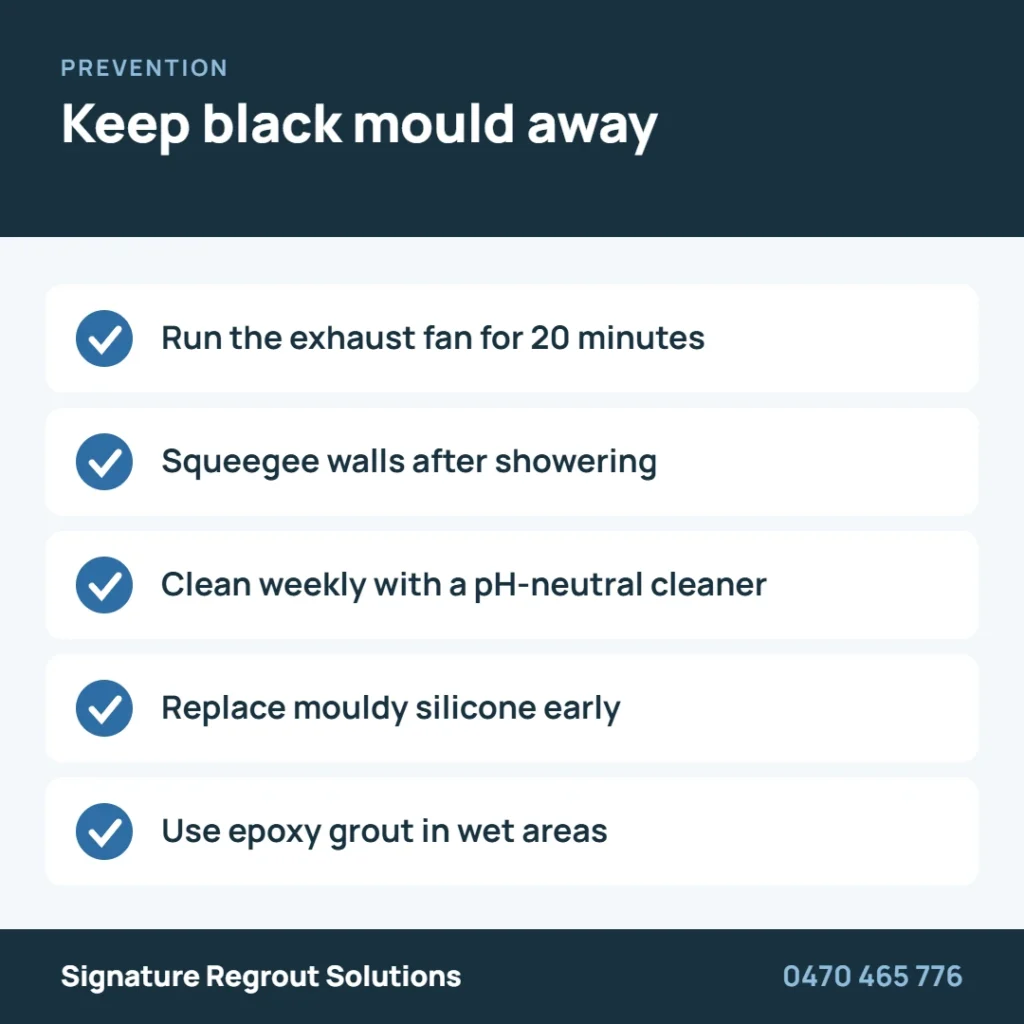
- Run the exhaust fan during and for 20 minutes after each shower.
- Squeegee the walls and floor so water doesn't sit in the joints.
- Clean weekly with a pH-neutral bathroom cleaner.
- Leave the shower door or curtain open to dry out.
- Replace silicone as soon as it starts lifting.
If the bathroom has no exhaust fan or the fan doesn't vent outside, black mould will keep returning whatever grout you use. It's worth fixing the airflow too.

Quick Questions
Is black mould in grout dangerous?
Mould can affect some people's health, especially those with asthma or allergies. It's best not to leave it, and to keep the room ventilated while you clean.
Will vinegar kill black mould in grout?
It can help on the surface, but used often it can wear down cement grout. A bathroom mould remover is usually more effective.
Can you regrout over mouldy grout?
No. The mouldy grout has to be removed first, or the mould stays trapped underneath.
The Bottom Line
Surface black mould can be cleaned. Black mould that keeps coming back is a grout problem, and fresh grout with good ventilation is what finally fixes it.
Black mould keeps coming back?
Send a photo on WhatsApp or give us a call. We'll tell you what it needs.