

If your tiles are fine but the lines between them look tired, cracked or mouldy, you may not need new tiles at all. Tile regrouting means removing the old, worn grout from between your tiles and replacing it with fresh grout. It restores the look of the tiles, seals the joints against water, and costs far less than replacing the tiles.
Here's how tile regrouting works, where it's used and when it's worth doing.

Wondering if your tiles need regrouting?
Send us a photo on WhatsApp and we'll give you an honest answer.
What Grout Does
Grout fills the joints between tiles. It locks them in place, keeps dirt out of the gaps and, in wet areas, helps stop water getting behind the tiles. Most grout is cement-based, as Wikipedia's overview of grout explains, which means it's porous and wears over time.
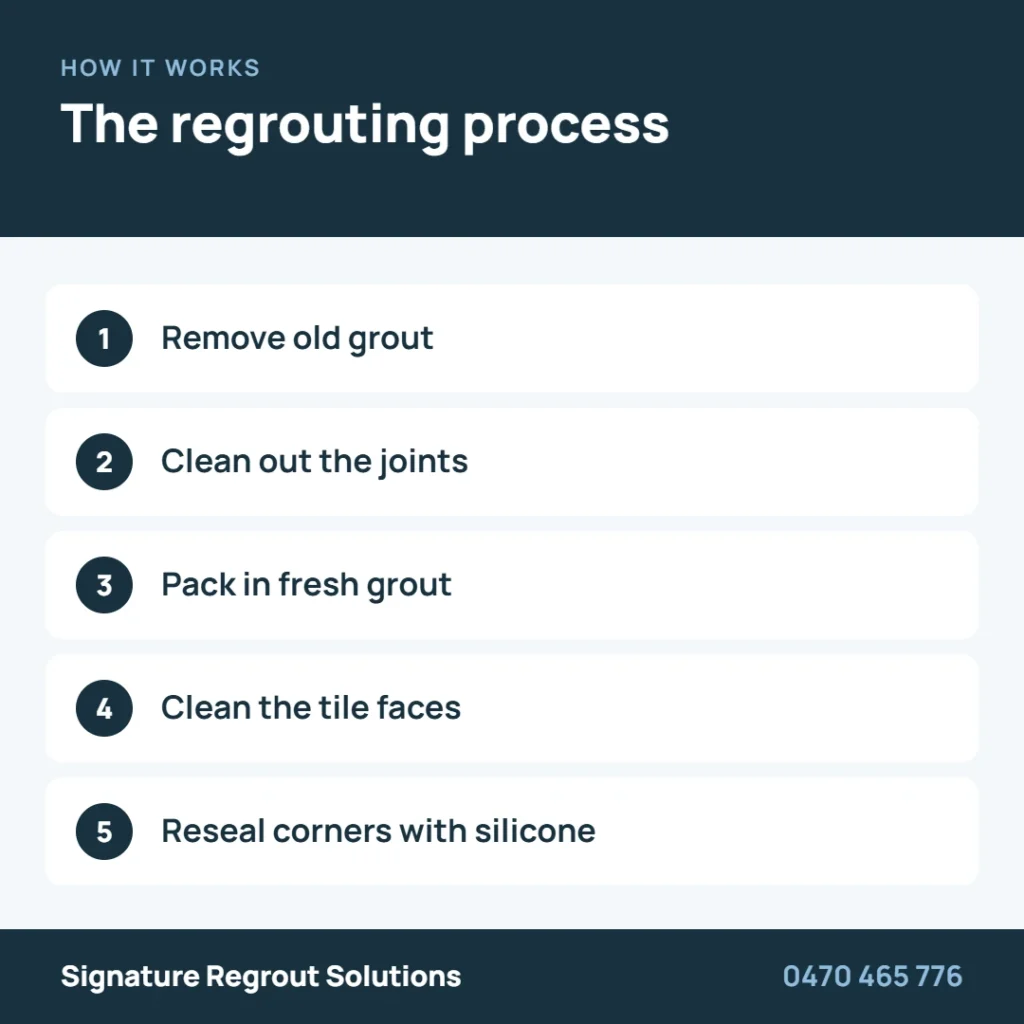
How Tile Regrouting Works
- Remove the old grout. The top layer of grout is cut or ground out of each joint, without damaging the tiles.
- Clean the joints. Dust and loose material are removed so the new grout can bond.
- Pack in fresh grout. New grout is pressed firmly into every joint.
- Clean the tiles. Excess grout and haze are wiped off the tile faces.
- Reseal the corners. Joints that move, such as corners and edges, get fresh silicone.
Our regrouting process guide goes through each step in more detail.
Where Tile Regrouting Is Used
- Showers: the most common job, because grout takes the most water here
- Bathroom floors and walls: see our bathroom floor and wall regrouting page
- Kitchen splashbacks: grease and stains build up in the lines, covered on our kitchen splashback regrouting page
- Laundries and toilets: wet floors that wear quickly
- Balconies: outdoor tiles that face weather all year

Ready to refresh your tiles?
Get a clear quote for tile regrouting with no surprises.
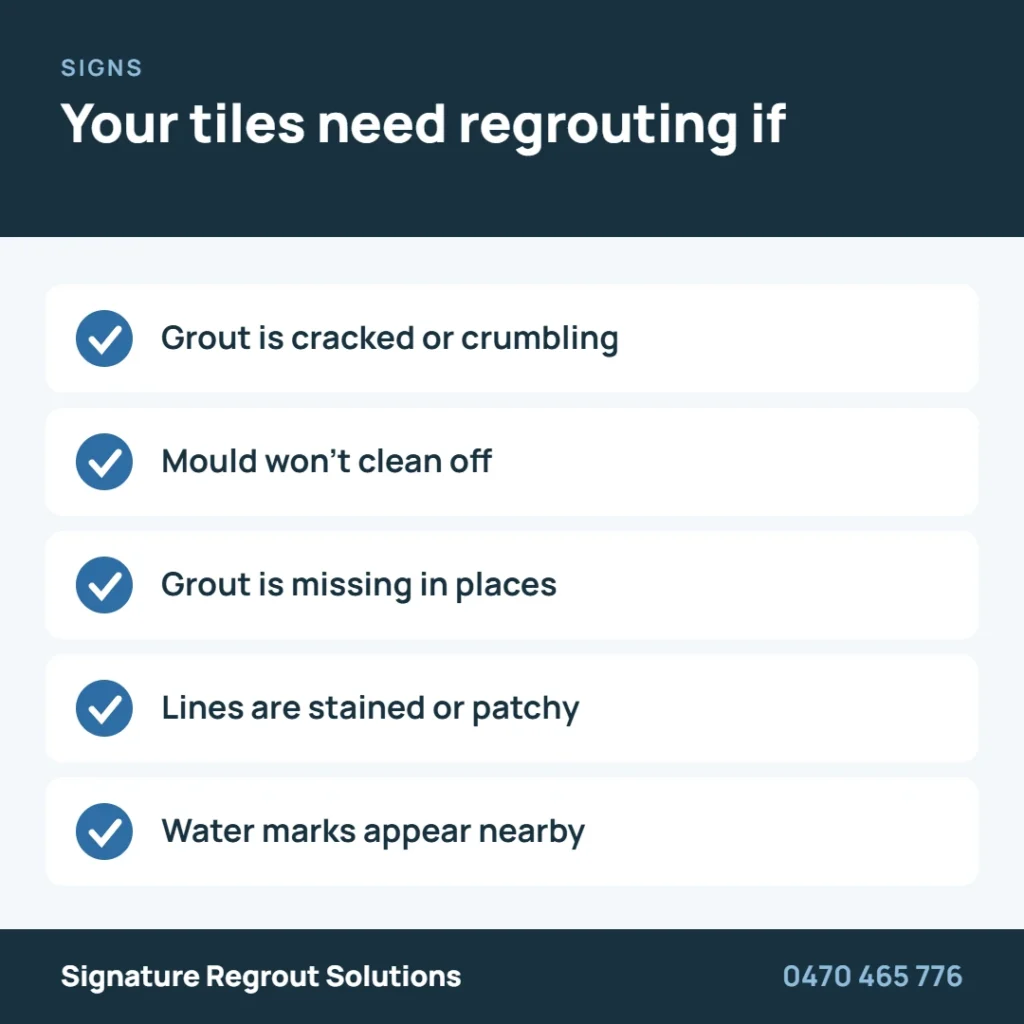
When Do You Need Tile Regrouting?
- Grout is cracked, crumbling or missing
- Mould keeps returning after cleaning
- Lines are stained, patchy or uneven in colour
- Water marks or damp show up near tiled areas
- Tiles look dated, but the tiles themselves are in good shape
If several of these apply, tile regrouting is usually the most cost-effective fix. Our guide is regrouting worth it? weighs it against other options.
When Regrouting Isn't Enough
Tile regrouting fixes grout. It won't fix tiles that are loose, cracked or hollow underneath, and it can't repair a failed waterproof membrane. If tiles sound drummy when tapped, or water has been leaking for a long time, those problems need attention first. A good regrouter will check before starting and tell you honestly.
Regrouting vs Replacing Tiles
Replacing tiles means removing everything, often including the waterproofing, then starting again. It's noisy, slow and expensive, and the room is out of action for days or weeks. Tile regrouting keeps the tiles you already have and only replaces the part that has worn out.
That makes sense when the tiles are still firmly stuck, uncracked and a style you're happy to keep. If the tiles are damaged or you want a completely new look, a renovation may be the better path. For most homes, though, tile regrouting delivers a fresh result at a fraction of the cost and disruption.
Choosing the Right Grout
Standard cement grout suits most walls and floors. Epoxy grout costs more but resists stains and water far better, which makes it popular in showers and kitchens. Our guide to epoxy vs regular grout compares them.
At Signature Regrout Solutions, tile regrouting is our core work. We'll recommend the grout that suits your tiles and how the room is used.
How Long Does It Last?
Done well, with the right grout and some basic care, fresh grout can last many years. Running the exhaust fan, wiping down wet areas and cleaning gently all help. Sealing cement grout adds extra protection against stains and moisture, especially on floors and splashbacks.

Quick Questions
Is tile regrouting messy?
There's some dust during removal, but a careful regrouter contains it and cleans up after.
How long does tile regrouting take?
A standard shower is usually done in a day. Larger floors or walls may take longer.
Can you change grout colour when regrouting?
Yes. Regrouting is the most reliable way to change grout colour.
The Bottom Line
Tile regrouting replaces worn grout, seals the joints and makes tired tiles look fresh again, for far less than new tiles. If your tiles are sound but the grout isn't, it's usually the smartest fix.
Need tile regrouting in Melbourne?
Send a photo on WhatsApp or call us for an honest quote.