
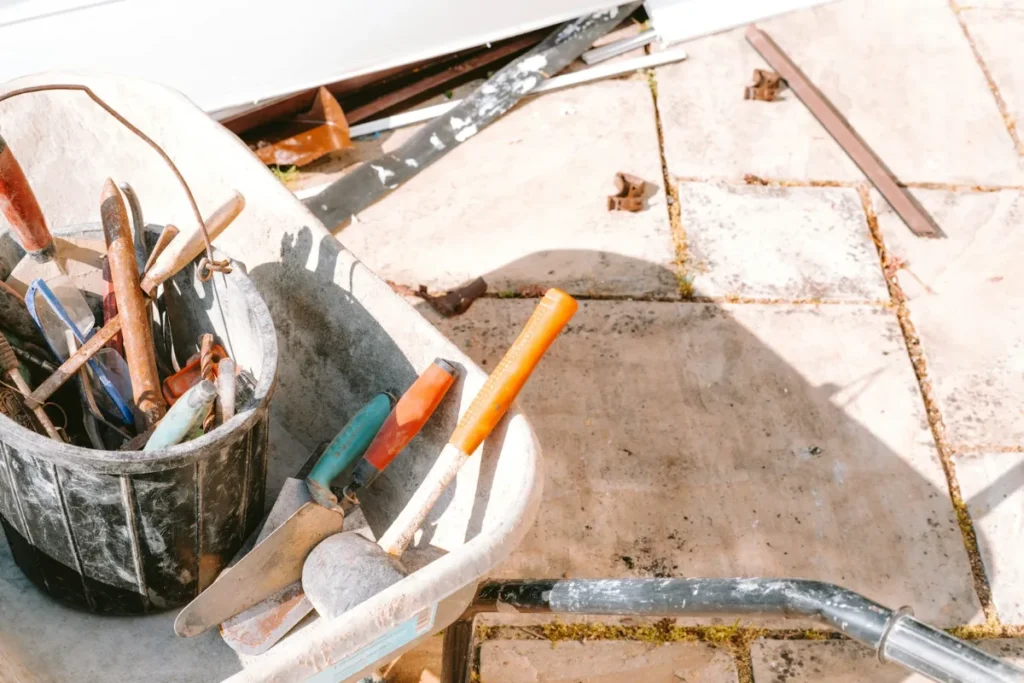
Regrouting looks simple, but the right tools make a huge difference to the result. The basic regrouting tools are a grout saw or removal tool, a vacuum and brush, a rubber grout float, sponges and buckets, and a silicone gun. Professionals add powered removal tools, dust extraction and specialist finishing tools to work faster and protect the tiles.
Here's what each of the regrouting tools does and when it's worth leaving the job to a pro.
Thinking about DIY?
Send us a photo on WhatsApp first and we'll tell you what you're in for.
Regrouting Tools for Removing Old Grout
Removal is the slowest and riskiest part of the job.
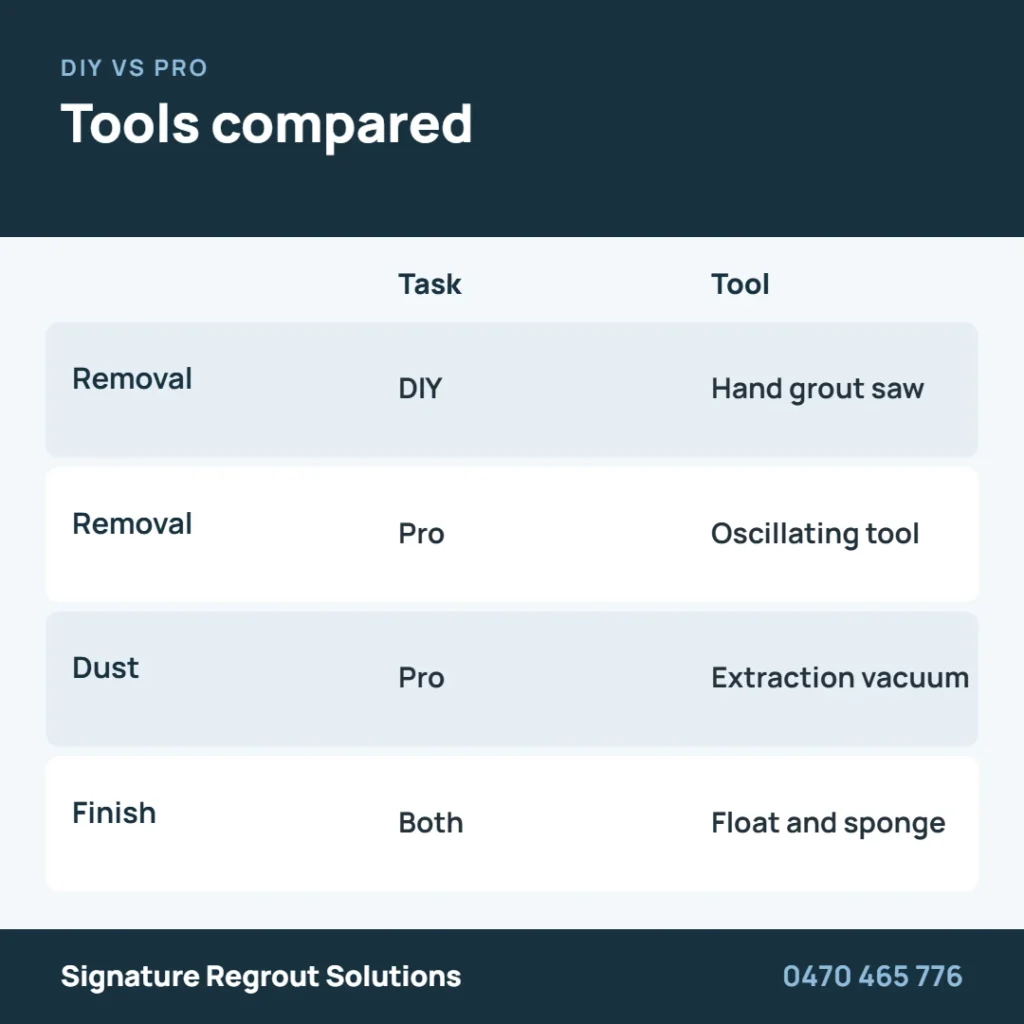
- Hand grout saw: a small carbide or steel blade for scraping grout out of joints. Cheap and controlled, but slow.
- Grout rake: similar, with a pointed tip for narrow joints.
- Oscillating multi-tool: a powered tool with a grout blade. Much faster, but easy to chip tiles if you slip.
- Utility knife: for cutting out old silicone in corners and along the base.

Regrouting Tools for Cleaning the Joints
- Vacuum: removes dust and loose grout from every joint.
- Stiff brush: loosens debris before vacuuming.
- Damp cloth: a final wipe so the new grout can bond.
Grout and cement dust can contain crystalline silica. WorkSafe Victoria explains why that dust needs controlling. A dust mask, eye protection and good ventilation are essential, whichever regrouting tools you use.
Regrouting Tools for Applying New Grout
- Rubber grout float: presses grout into the joints and scrapes off the excess.
- Mixing bucket and paddle: for mixing grout to the right consistency.
- Grout sponge: a dense sponge for wiping the tile faces.
- Second bucket of clean water: for rinsing the sponge often.
- Microfibre cloths: for buffing off haze once the grout has firmed.
Rather skip the tools and dust?
We'll regrout your shower properly. Get a clear quote.
Regrouting Tools for Finishing and Sealing
- Silicone gun: for running new silicone in corners and along the base.
- Smoothing tool: for a neat, even bead.
- Masking tape: optional, for clean silicone lines.
- Grout sealer and applicator: for sealing cement grout once it has cured.
Regrouting Tools Professionals Use
Professional regrouting tools go further: powered removal tools with guarded blades, dust extraction vacuums, joint-cleaning brushes and specialist floats for epoxy grout. More important than the gear is experience. Knowing how deep to cut, how wet to keep the sponge and when to start cleaning makes more difference than any tool.
At Signature Regrout Solutions, we bring all of our own regrouting tools, protect the bathroom while we work and clean up before we leave.
Common Mistakes With Regrouting Tools
- Using a powered tool too aggressively and chipping tile edges
- Removing too little old grout, so the new grout cracks
- Using a steel float, which can scratch tiles
- Not rinsing the sponge, which spreads haze
- Skipping dust protection
Our guide to regrouting mistakes covers more pitfalls, and our regrouting process guide shows how a professional job flows from start to finish.
Looking After Your Regrouting Tools
Clean every tool as you go. Grout sets hard on floats, buckets and paddles within the hour, and dried grout ruins a sponge. Rinse everything in a bucket rather than the sink, because grout washed down the drain can set in the pipes and cause a blockage. Replace worn grout saw blades, as dull blades slip and chip tiles. Well-kept regrouting tools give cleaner, safer results every time.
Should You Buy the Tools or Hire a Pro?
Buying a basic set of regrouting tools isn't expensive, but the job takes much longer than most people expect, especially removing old grout by hand. For a small area, such as a splashback or a few floor tiles, DIY can work. For a whole shower, the time, dust and risk of damaged tiles often make professional regrouting the better value. Our guide to DIY regrouting helps you decide.
Quick Questions
What is the best tool to remove grout?
For control, a hand grout saw. For speed, an oscillating tool with a grout blade, used carefully.
Do I need special tools for epoxy grout?
Yes. Epoxy sets fast and needs specific floats, cleaning pads and quick work.
Can I regrout without removing the old grout?
No. New grout needs depth to bond, so the old grout has to come out.
The Bottom Line
The right regrouting tools make the job cleaner and safer, but skill matters most. For small areas, DIY can work. For showers, a professional usually gets a better, longer-lasting result.
Want it done without the hassle?
Send a photo on WhatsApp or give us a call for an honest quote.