

New grout should look good for years, not weeks. When it cracks or flakes soon after the job, the cause is almost always in the preparation. The most common regrouting mistakes are grouting over old grout, not removing enough, grouting the corners, ignoring loose tiles and using the shower before the grout has cured.
Here are the seven regrouting mistakes we see most often, and how to make sure your job avoids them.
New grout already cracking?
Send us a photo on WhatsApp and we'll tell you what probably went wrong.
1. Grouting Over Old Grout
The most common of all regrouting mistakes. New grout is spread straight over the old to save time. The layer is too thin and has nothing solid to grip, so it cracks and flakes off. Old grout has to be cut out first.
2. Not Removing Enough Old Grout
Scratching the surface isn't enough. New grout needs depth to bond. Shallow removal gives the same result as grouting over the top.
3. Grouting the Corners
Corners and the joint where walls meet the floor move slightly. Rigid grout cracks there. Those joints need flexible silicone. Our guide to silicone vs grout in shower corners explains why.
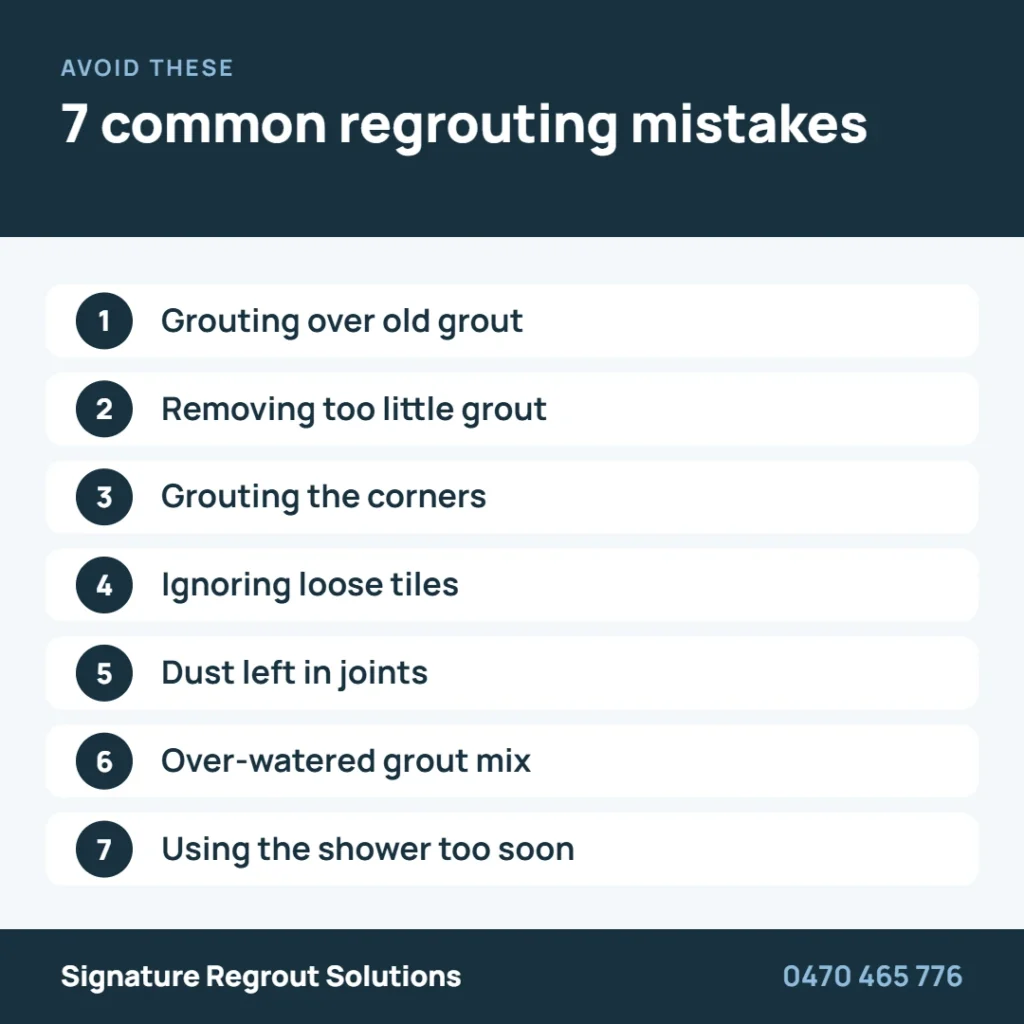
4. Ignoring Loose Tiles
A tile that sounds hollow flexes underfoot and cracks the grout around it within weeks. Loose tiles should be found and fixed first. Our guide to drummy tiles explains how to check.
5. Leaving Dust in the Joints
Grout won't bond to dust. Every joint needs vacuuming and cleaning after removal. Skipping this step is one of the quieter regrouting mistakes, but it shows up later as crumbling.
6. Over-Watering the Grout Mix
Adding extra water makes grout easier to spread but weaker once it dries. It shrinks, cracks and wears faster.
7. Using the Shower Too Soon
Fresh grout needs time to cure. Water too early can wash out the surface or stop it reaching full strength. Our guide to how long after regrouting you can shower has the details.

Want a regrout done without the shortcuts?
We'll explain every step and give you a clear quote before any work starts.
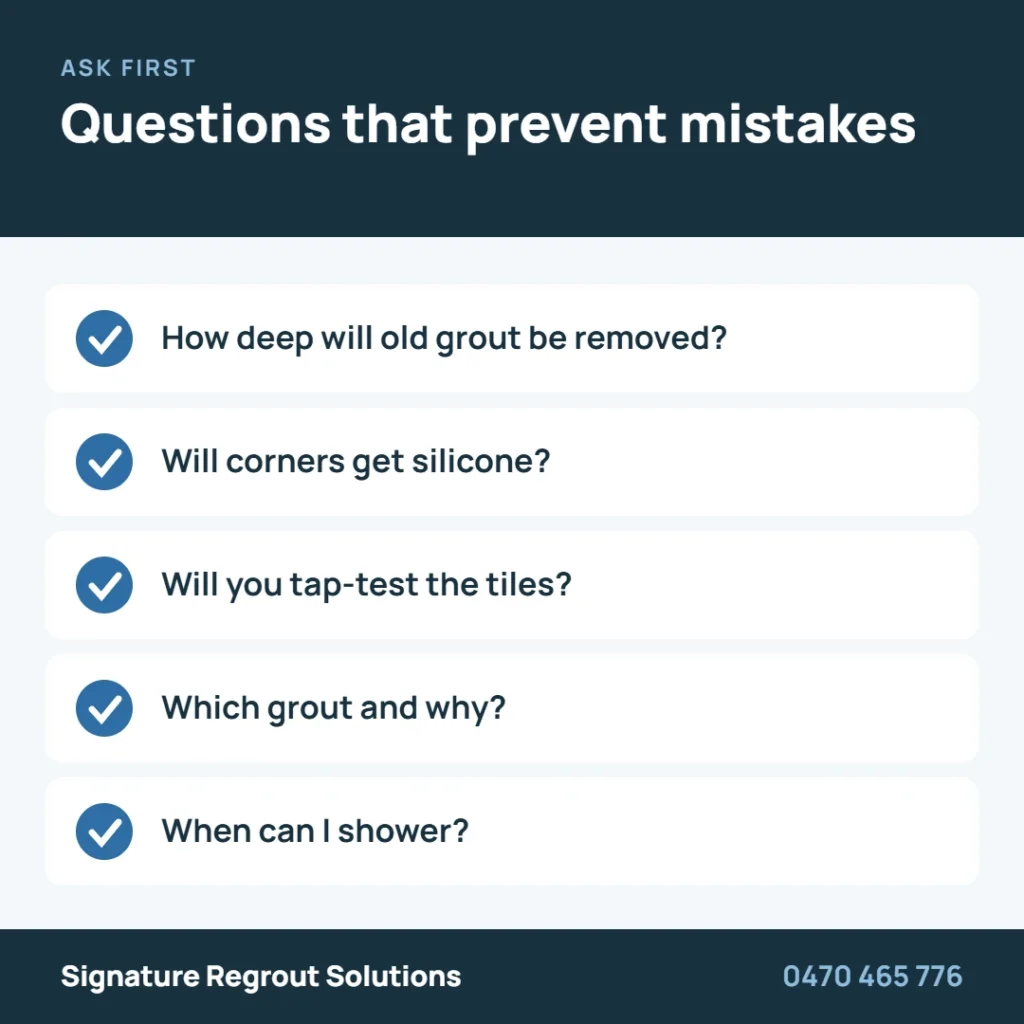
How to Avoid Regrouting Mistakes Before They Happen
Ask how the job will be done before you book. A good answer covers removal depth, cleaning, silicone in the corners, tile checks and curing time. If the quote only says "regrout shower" with a price, ask for more detail. Our guide to choosing a regrouting company lists the questions worth asking.
Regrouting Mistakes in DIY Jobs
DIY jobs tend to make the same regrouting mistakes, mostly because removing old grout is slow and tiring. It's tempting to stop once the surface looks clean. Corners get grouted because it's quicker than learning to run a neat silicone bead. And the shower goes back into use the next morning.
If you're doing it yourself, the two regrouting mistakes to avoid above all are shallow removal and grouted corners. Get those right and the rest is much more forgiving. Our DIY regrouting guide walks through the steps.
Regrouting Mistakes With Epoxy
Epoxy grout brings its own regrouting mistakes. It sets quickly, so working in sections that are too large leaves dried grout on the tiles. Cleaning back too late leaves a haze that's very hard to remove. Mixing the wrong ratio stops it curing properly. Those are all reasons epoxy rewards experience.
Fixing a Failed Regrout
If your grout has already failed because of regrouting mistakes, the fix is to cut it out properly and start again. Patching over a bad job usually fails too. At Signature Regrout Solutions, we're often called in to redo work like this, and the second job always starts with full removal.
The Hidden Cost of Shortcuts
Every one of these regrouting mistakes saves a little time on the day and costs much more later. A failed regrout means paying again, more time without the shower, and sometimes water damage behind the tiles in the meantime. Mould can also take hold in cracked grout; the Better Health Channel explains why damp areas are worth fixing.
Quick Questions
How soon do regrouting mistakes show up?
Often within weeks or a few months, as cracks, flaking or crumbling.
Can a bad regrout be fixed with a patch?
Rarely. The faulty grout usually needs to be removed and replaced properly.
Is epoxy grout less prone to regrouting mistakes?
It's more durable once cured, but harder to install, so technique matters even more.
The Bottom Line
Avoid these seven regrouting mistakes and new grout lasts for years. Ask how the job will be done, not just what it costs.
Want it done properly the first time?
Send a photo on WhatsApp or give us a call for an honest answer.