
Black spots along the bottom of the shower or the edge of the bath are one of the most common bathroom complaints we hear. People scrub, bleach and scrub again, and the marks come back. Mouldy silicone usually can't be cleaned properly, because the mould grows underneath and inside the sealant. Once it's in, the silicone needs to be cut out and replaced.
Here's why mouldy silicone is so stubborn, how it should be replaced and how to keep it from coming back.

Fed up with mouldy silicone?
Send us a photo on WhatsApp and we'll tell you if it can be cleaned or needs replacing.
Why Mouldy Silicone Won't Clean Up
Silicone is flexible and slightly porous, and mould spores get into tiny gaps and behind the edges. Soap scum sitting on the surface feeds them. Over time the mould grows between the silicone and the tile, where no cleaner can reach.
Bleach can lighten the colour for a while, which is why it looks fixed. Within weeks the dark spots return, because the mould underneath was never touched. The Better Health Channel explains why damp rooms are so good for mould.
Where Mouldy Silicone Shows Up First
- Along the joint between the shower walls and the shower base
- In the vertical corners of the shower
- Along the edge of the bath
- Around the bottom of the shower screen
- Behind taps and around the vanity
These are the places where water sits longest after each use.
How Mouldy Silicone Is Replaced Properly
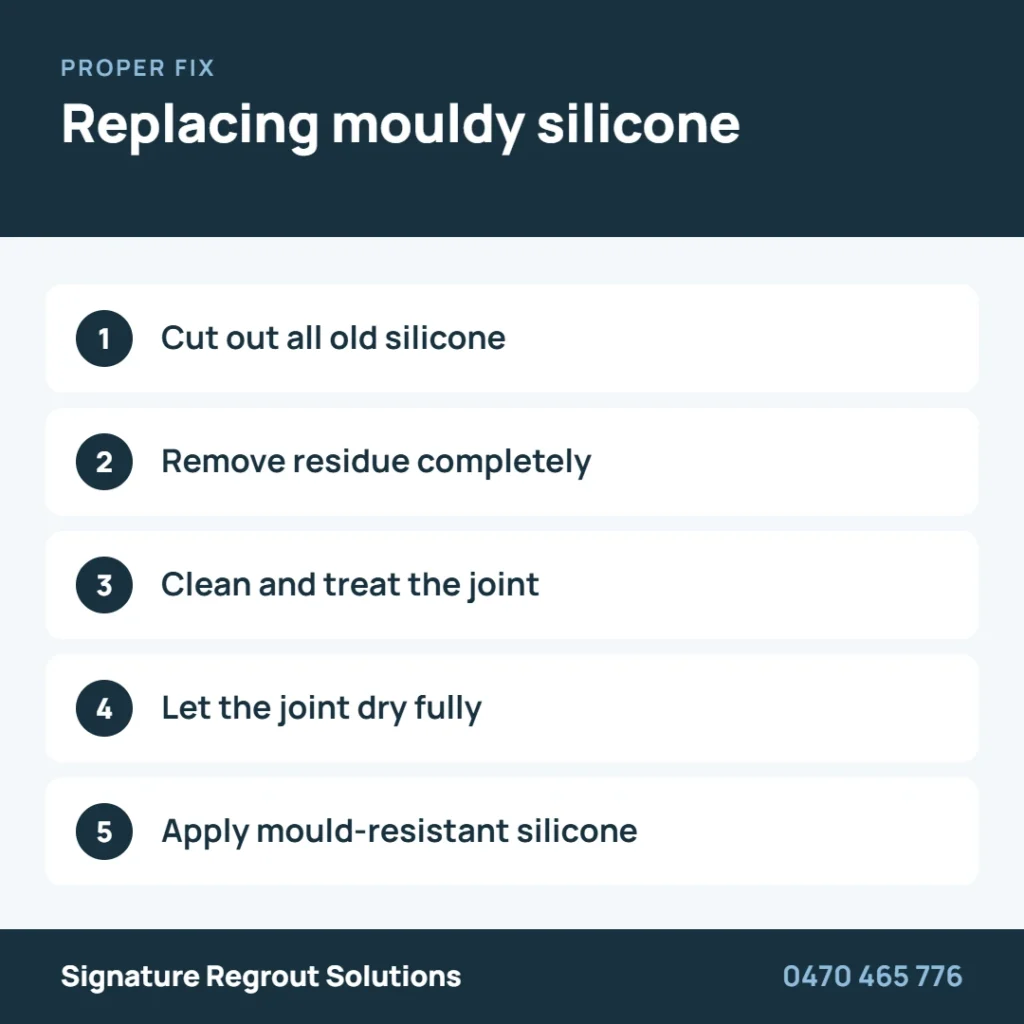
- Cut it all out. Every bit of old silicone is removed, not just the visible strip.
- Remove the residue. New silicone won't bond to old silicone or film.
- Clean and treat. The joint is cleaned and treated for mould.
- Dry the joint. Silicone needs a dry surface to stick.
- Apply new silicone. A bathroom-grade, mould-resistant silicone is applied and tooled smooth.
Our silicone replacement page shows the process, and our guide to silicone vs grout in shower corners explains where silicone belongs.
Want mouldy silicone replaced properly?
We'll check the silicone and grout and give you a clear quote before any work starts.
Is Mouldy Silicone a Sign of a Bigger Problem?
Sometimes. If the silicone is lifting and there's damp outside the shower, water may be getting behind the tiles. Our guide to the signs of a shower leak explains what to check. If the grout is also dark and crumbly, our guide to black mould in shower grout is worth reading.
Choosing the Right Silicone
Not all silicone is made for bathrooms. General-purpose sealants can grow mould far faster than products made for wet areas. A good bathroom silicone is flexible, water resistant and contains a mould inhibitor. It should also suit the surfaces it's joining, whether that's tile, acrylic, glass or stone.
Colour matters too. Clear silicone shows mould underneath very quickly. White or grey silicone matched to the grout looks neater and hides minor marks better. If you're changing the grout colour as part of a regrout, it's worth matching the new silicone at the same time, so the corners and edges blend in.
Can You Replace Mouldy Silicone Yourself?
You can, but the hard part is the removal. Leaving any old silicone behind means the new bead peels early. Rushing the drying time has the same effect. A neat, even bead also takes practice. If you try it yourself, take your time with the removal and let the joint dry overnight.
How to Stop Mouldy Silicone Coming Back
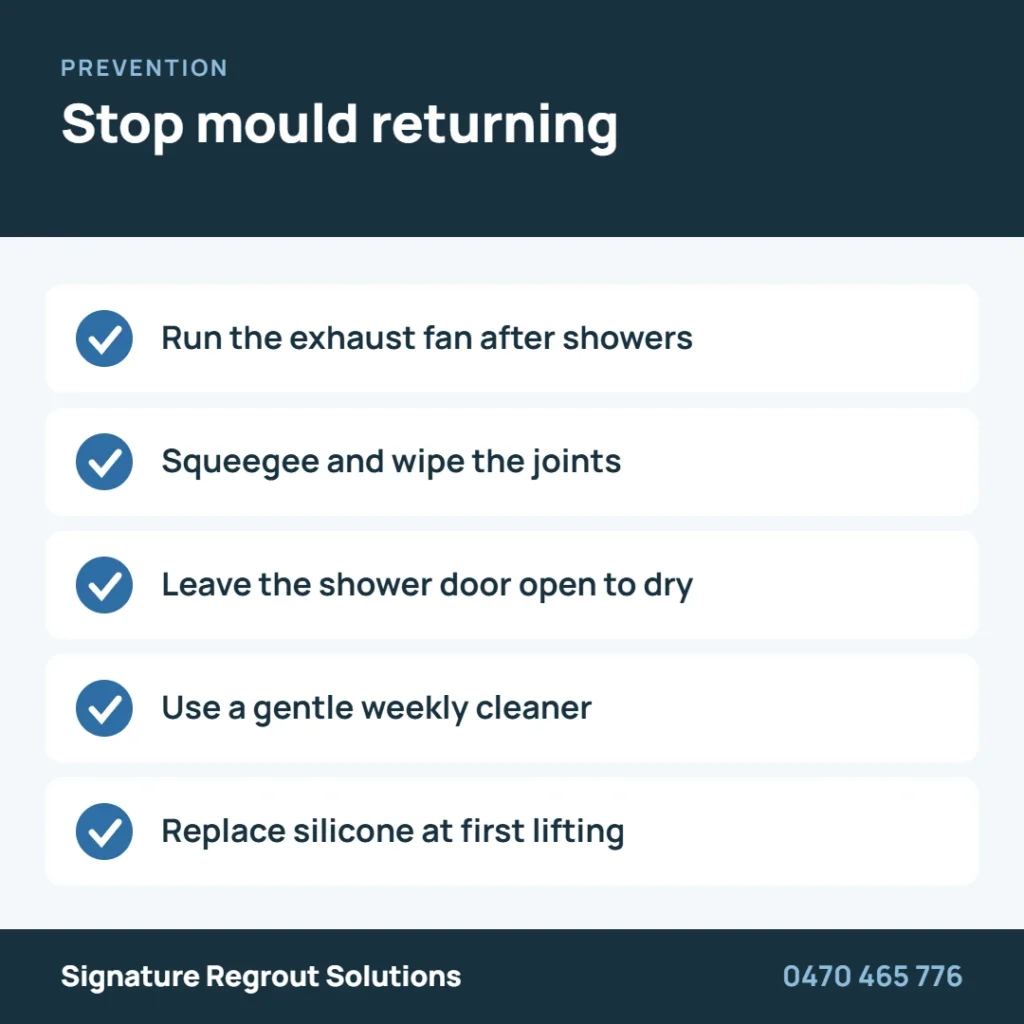
- Run the exhaust fan during and after every shower.
- Squeegee the walls and wipe the bottom joint dry.
- Leave the shower door or curtain open so the area dries.
- Clean weekly with a gentle bathroom cleaner.
- Replace silicone as soon as it starts lifting.
At Signature Regrout Solutions, we often replace mouldy silicone at the same time as a regrout, because both fail for the same reasons and doing them together gives a cleaner finish.

Quick Questions
How long does new silicone take to cure?
Usually around a day before light use, but follow the product's instructions.
Is mouldy silicone harmful?
Mould can affect some people's health, especially those with asthma or allergies, so it's best not to leave it.
Can I put new silicone over mouldy silicone?
No. The mould stays trapped underneath and the new silicone won't stick properly.
The Bottom Line
If cleaning hasn't worked after a couple of tries, it won't. Cut out the mouldy silicone, reseal properly, and keep the bathroom dry.
Ready to replace mouldy silicone?
Send a photo on WhatsApp or give us a call. We'll give you an honest answer and a clear quote.