
The shower base is where water collects, drains and sits the longest, so it's no surprise it's the most common place for a shower to leak. A leaking shower base is usually caused by cracked floor grout, failed silicone where the walls meet the base, gaps under the screen, or a membrane that has broken down underneath.
The first three can often be fixed by regrouting and resealing. Here's how to work out which one you have.

Think your shower base is leaking?
Send us photos on WhatsApp of the shower and any damp outside it. We'll tell you what they point to.
Why the Shower Base Leaks First
The shower base holds water for longer than any other surface, so its grout and silicone wear out fastest. Every shower leaves water sitting in the floor joints and along the bottom edges. Cement grout slowly absorbs it and cracks. Silicone where the walls meet the shower base takes constant movement and water, so it eventually peels.
Once there's a gap, water reaches the tile bed and spreads under the shower base towards the skirting, the next room or the ceiling below.
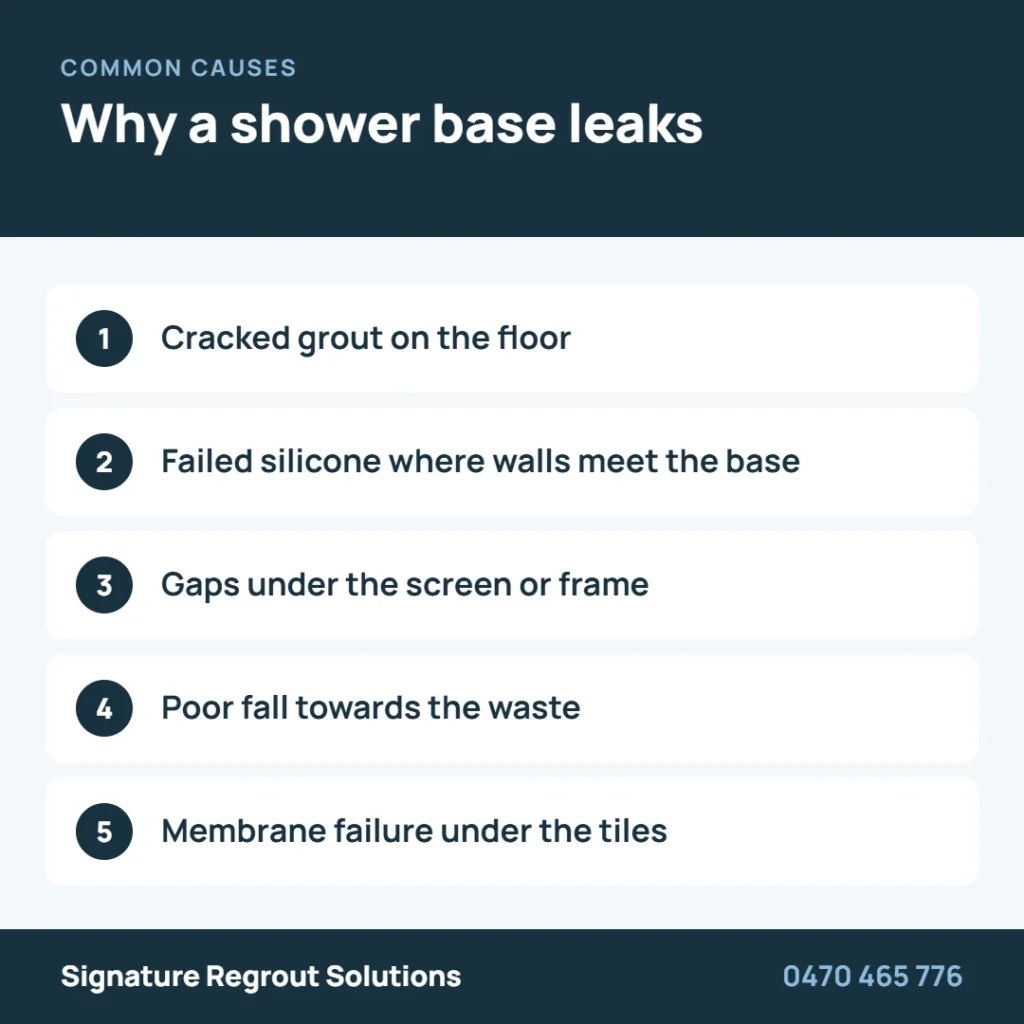
Common Causes of a Leaking Shower Base
- Cracked or missing floor grout. The most common cause, especially near the drain.
- Failed silicone at the wall-to-floor joint. Water runs down the walls and straight into the gap.
- Gaps under the screen or frame. Water can track under the screen and out onto the bathroom floor.
- Poor fall. If water doesn't drain quickly and pools in one spot, it finds weak joints.
- Membrane failure. If the waterproofing under the floor has failed, surface repairs won't last. The Building and Plumbing Commission explains how wet areas should be waterproofed.
Signs Your Shower Base Is Leaking
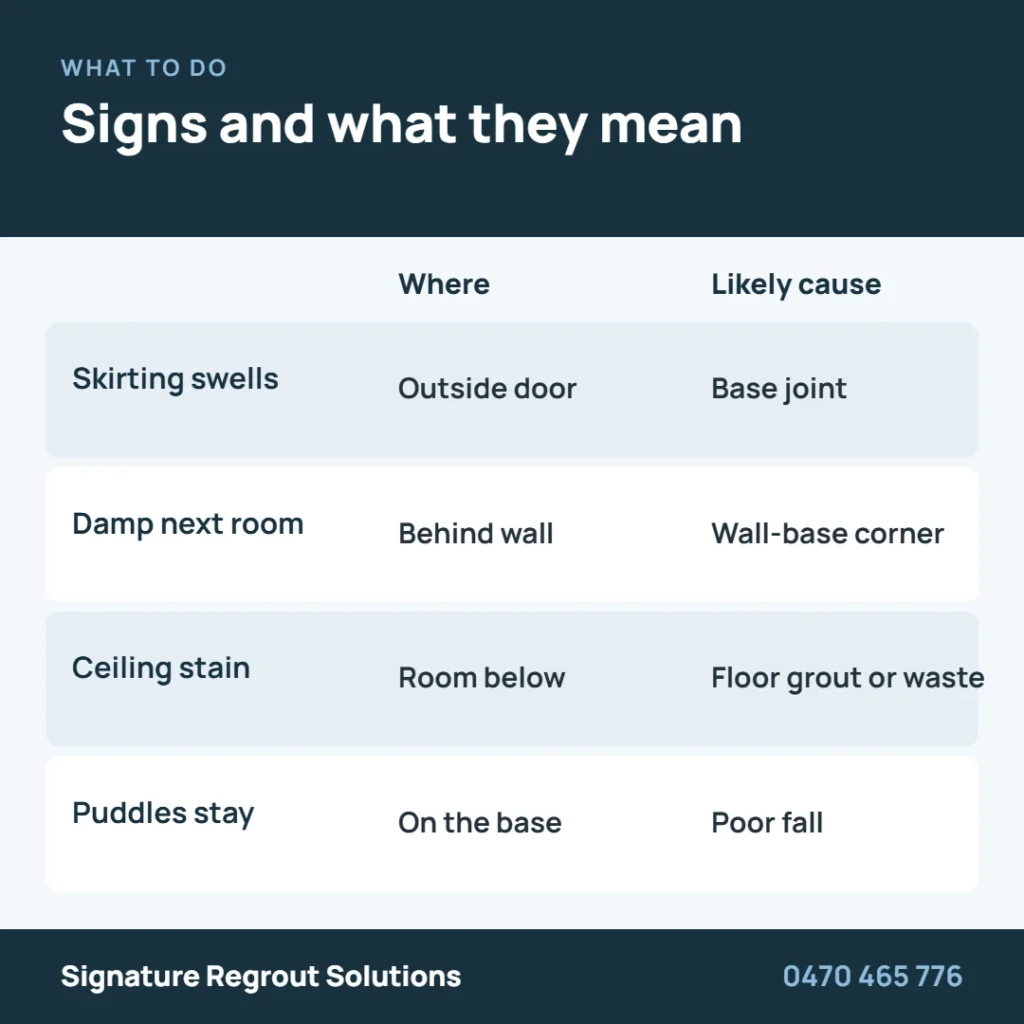
Look outside the shower first. Swollen or flaking skirting near the door, damp carpet or lifting floorboards in the next room, or a stain on the ceiling below are all common signs. Inside, look for cracked floor grout, gaps at the base of the walls and silicone that's black or peeling. Our guide to the signs of a shower leak covers this in more detail.
Want your shower base checked?
We'll look at the grout, silicone and screen and give you a clear quote before any work starts.
How a Leaking Shower Base Is Fixed
When the leak is through the grout and silicone, the fix doesn't involve removing tiles:
- Cut out the old grout on the base to a proper depth.
- Remove every bit of old silicone.
- Clean and dry the joints.
- Regrout the floor, usually with epoxy grout in a shower.
- Reseal the wall-to-floor joints, corners and screen.
Our shower base regrouting page shows this process, and our guide to fixing a leaking shower without removing tiles explains when it works.
When It Needs More
If the damp continues after the shower base has been regrouted and resealed, the membrane is the likely cause. That needs a bigger repair. At Signature Regrout Solutions, we'll tell you plainly if that's what we find, rather than selling a regrout that won't solve it.
Why Older Bathrooms Are More Likely to Leak
Many older Melbourne bathrooms were built with cement grout on the floor and a silicone joint that was never replaced. Decades of daily use wear both down. Some older showers also have a bed of mortar under the tiles that soaks up water and holds it, which keeps the area damp for longer.
Newer bathrooms aren't immune either. Settling in the first few years can crack floor grout and pull silicone away from the walls. Either way, the early signs look the same, and catching them early keeps the repair simple.
Preventing Another Leak
- Squeegee the shower floor after each use so water doesn't sit in the joints.
- Keep the drain clear so water runs away quickly.
- Check the silicone every few months and fix small gaps early.
- Avoid harsh acid cleaners that wear cement grout down.
Quick Questions
Can a leaking shower base be fixed without removing tiles?
Often, yes, when the leak is through the grout and silicone rather than the membrane.
Why does my shower base leak only sometimes?
It may leak when water sits longer, such as after long showers or when the drain is slow.
Is epoxy grout better for a shower base?
Usually. It barely absorbs water, which suits the wettest part of the shower.
The Bottom Line
Most leaks start at the floor, and most of those start at the grout and silicone. Catch them early and the fix is quick.
Seeing damp near your shower base?
Send a photo on WhatsApp or give us a call. We'll tell you what's causing it.