

If your shower looks tired, mouldy or cracked, regrouting is often the fix that makes the biggest difference for the least disruption. Regrouting a shower means cutting out the old grout, cleaning the joints, putting in fresh grout and resealing the corners with silicone. The tiles stay where they are.
This guide covers what regrouting a shower involves, what it fixes, what it doesn't, and how to plan for it.
Thinking about regrouting a shower?
Send us a photo on WhatsApp and we'll tell you what your shower needs.
What Regrouting a Shower Involves
The job is mostly preparation. We tap-test the tiles, protect the drain, cut the old grout out to an even depth, clean every joint, regrout, clean back the tiles and replace the silicone. Our guide to the regrouting process walks through each step in detail.
The tiles aren't removed, so there's no demolition and the bathroom isn't out of action for long.
What Regrouting a Shower Fixes
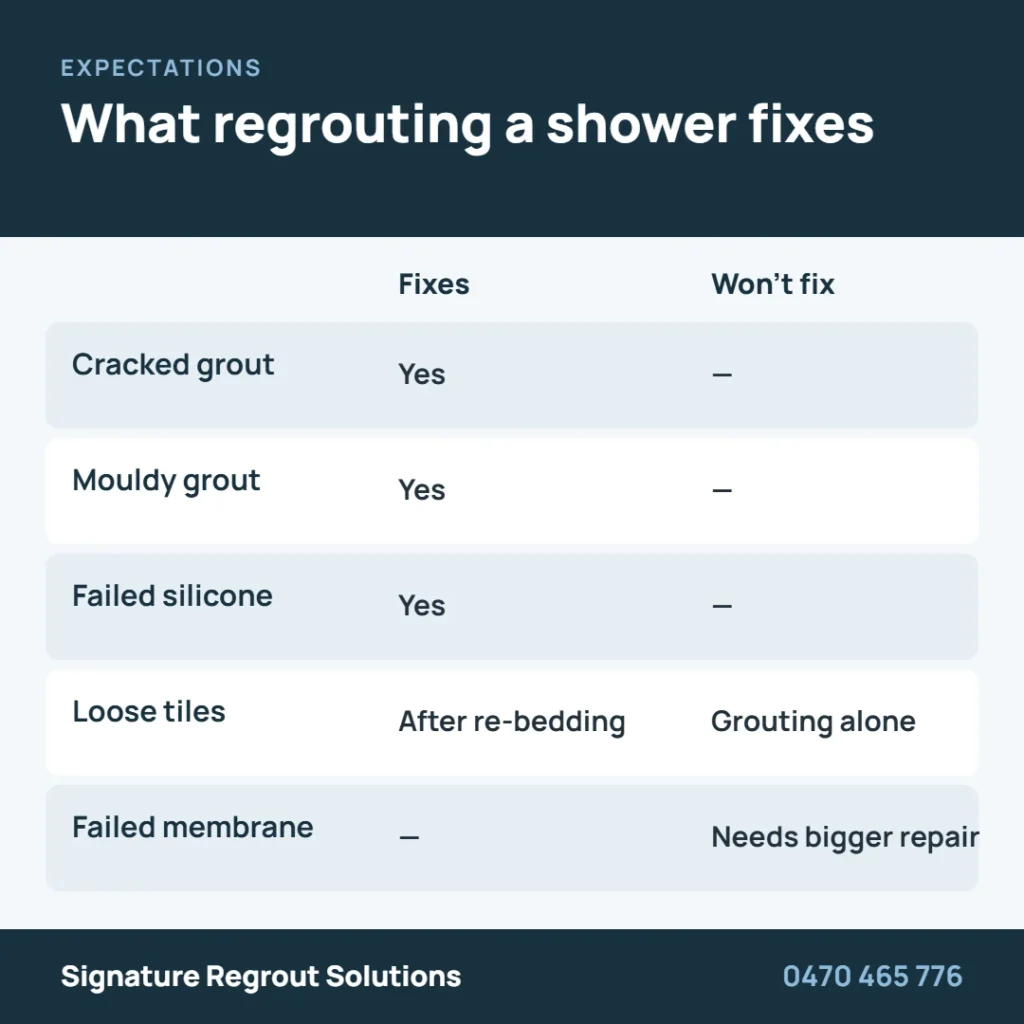
- Cracked, crumbly or missing grout
- Mould that has grown into the grout
- Dark, patchy grout that won't clean up
- Peeling or mouldy silicone
- Leaks coming through the grout and silicone
What It Won't Fix
Regrouting a shower won't fix loose tiles on its own, and it won't fix a failed waterproofing membrane. Loose tiles need re-bedding first, or they'll crack the new grout. If the membrane has failed, water keeps escaping even with perfect grout. The Building and Plumbing Commission explains how wet areas are waterproofed, and our guide to the signs of a shower leak explains what to check.

Choosing Grout When Regrouting a Shower
Epoxy grout barely absorbs water, resists mould and stains, holds its colour and doesn't need sealing. Cement grout is cheaper and easier to apply but needs sealing and usually needs attention sooner. For the shower floor and lower walls, we usually recommend epoxy. Our guide on whether epoxy grout is worth it explains why.
Want a quote for regrouting a shower?
We'll check the tiles, grout and silicone and give you a clear, itemised quote.
Signs It's Time
Most people start thinking about regrouting a shower when they notice one of these: cracks along the floor grout, black mould that won't shift, gaps at the base of the walls or silicone that's peeling away. Water marks outside the shower are a sign it's become urgent.
If you're on the fence, our guide to the signs you need regrouting has a five-minute check. The earlier you act, the simpler regrouting a shower is, because the tiles and the layers underneath are still in good shape.
Preparing Your Bathroom
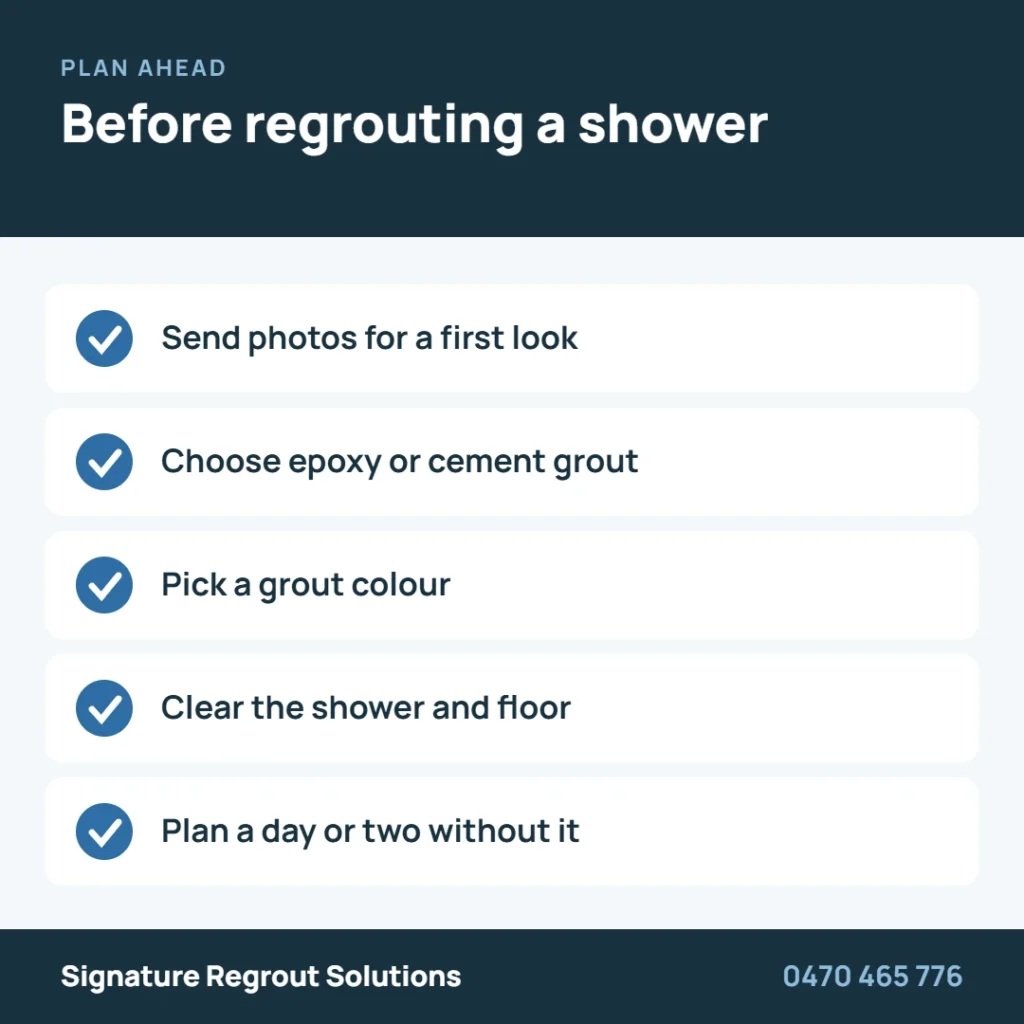
Before regrouting a shower, clear out bottles, racks and mats, and move anything stored on the bathroom floor. Make sure there's clear access to the room. If you have spare tiles from when the bathroom was built, set them aside in case a loose tile needs replacing.
How Long It Takes
A standard shower is usually done in a day. Then the grout needs time to cure: often about a day with epoxy, longer with cement. Our guide on how long after regrouting you can shower has the details.
How Much Does It Cost?
The price depends on tile size, the state of the old grout, the grout type and any repairs. Our guide to shower regrouting cost explains what changes the price and how to compare quotes.
Is Regrouting a Shower Worth It?
If the tiles are solid, yes. It costs a fraction of a renovation and makes the shower look and work like new. If you're still deciding, our honest guide on whether it's worth regrouting helps you weigh it up.
At Signature Regrout Solutions, regrouting a shower is the job we do most across Melbourne. We'll tell you plainly if it's the right fix, and if it isn't.
Getting the Most From It
Once the job is done, a little care keeps it looking new. Squeegee after showers, run the exhaust fan, clean weekly with a gentle cleaner and check the silicone every few months. Those small habits are what make the difference between grout that lasts and grout that needs attention again soon.
Quick Questions
Do I need to be home during regrouting a shower?
Not the whole time, but it helps to be there at the start and end to go over the job.
Can you change the grout colour?
Yes. All the old grout comes out, so you can choose a new colour.
Will my shower be watertight afterwards?
If the leak was through the grout and silicone, yes. A failed membrane needs a separate repair.
The Bottom Line
Regrouting a shower fixes cracked, mouldy and tired grout without tearing the bathroom apart. Check the tiles first, choose the right grout, and it will last for years.
Ready to talk about regrouting a shower?
Send a photo on WhatsApp or give us a call for an honest answer and a clear quote.