

Shower silicone is the flexible seal in the corners, along the base and around the screen. Good-quality shower silicone, properly applied, typically lasts several years. Daily use, poor ventilation, harsh cleaning and rushed preparation can shorten that a lot, so it's the condition of the seal, not its age, that tells you when to replace it.
Here's what affects how long shower silicone lasts and the signs it's time for new.
Shower silicone looking tired?
Send us a photo on WhatsApp and we'll tell you if it needs replacing.
Why Shower Silicone Wears Out
Silicone sits in the joints that move: vertical corners, the wall-to-base joint and around the screen. Every time the shower runs, those joints get wet, warm up, cool down and shift slightly. Over years, the silicone loses flexibility, the edges lift and mould finds its way underneath.
Our guide to silicone vs grout in shower corners explains why these joints need silicone rather than grout.
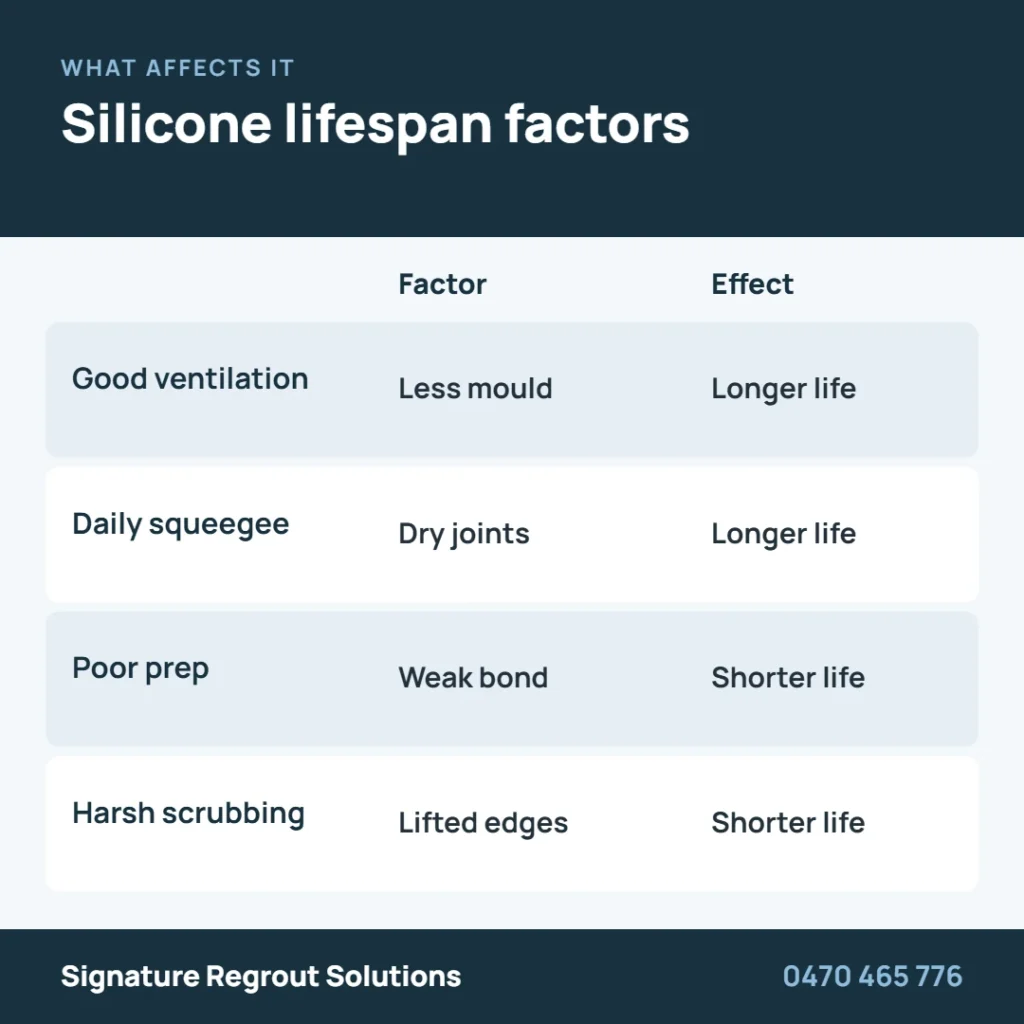
What Makes It Last Longer (or Fail Sooner)
Things that help:
- Running the exhaust fan during and after showers
- Squeegeeing walls and wiping the base joint dry
- Gentle cleaning with a soft cloth or brush
- Bathroom-grade, mould-resistant silicone
- Careful preparation when it's applied
Things that shorten its life:
- Poor airflow and a bathroom that stays damp
- Abrasive pads or strong bleach scrubbing
- Silicone laid over old silicone or soap film
- A thin bead that can't handle movement

Want your shower silicone replaced properly?
We'll remove the old seal completely and quote before we start.
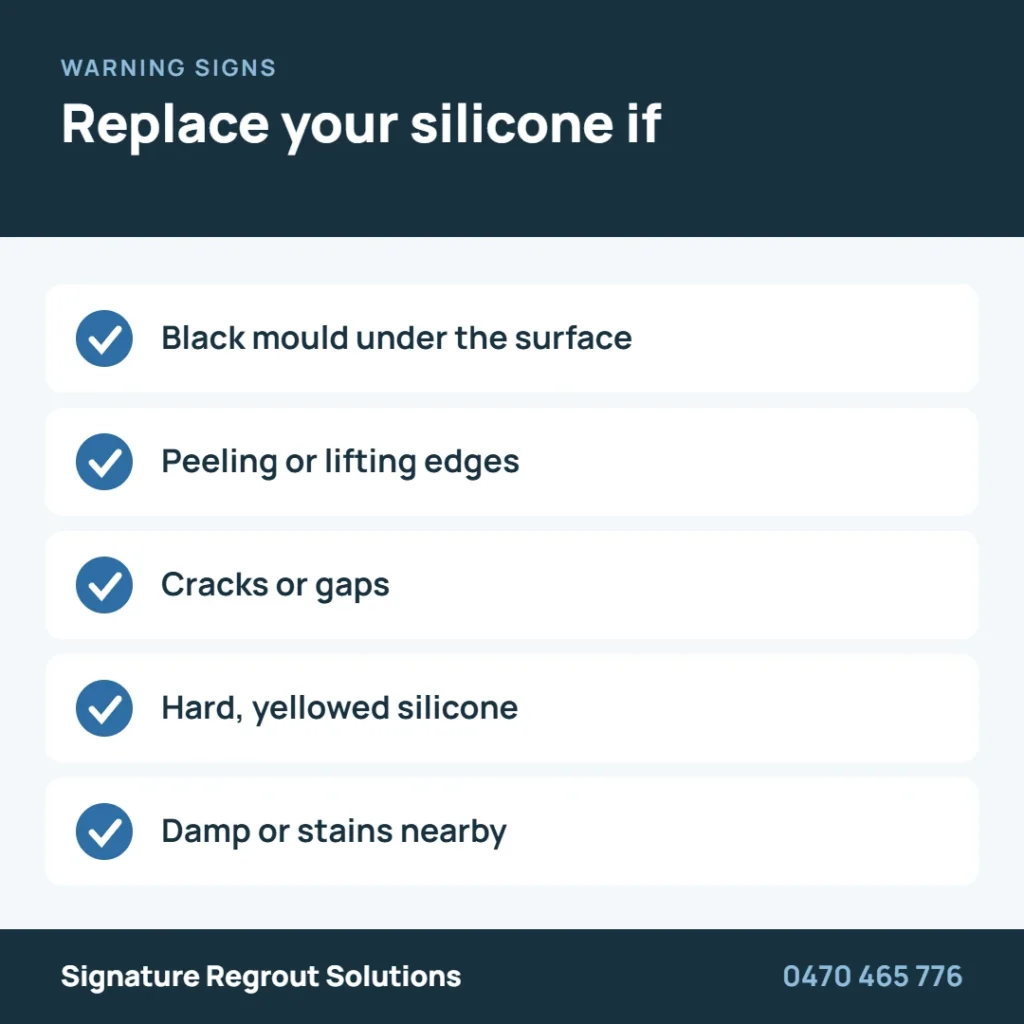
Signs Shower Silicone Needs Replacing
- Black mould under the surface that won't clean off
- Peeling or lifting edges
- Cracks, gaps or missing sections
- Hard, yellowed or brittle silicone
- Damp, stains or swelling outside the shower
When mould is under the silicone rather than on top, cleaning won't reach it. Our guide to mouldy silicone explains why it keeps coming back. The Better Health Channel also explains why damp, mouldy rooms are worth fixing promptly.
Can You Just Clean It Instead?
Sometimes. Surface marks on sound silicone often clean up with a mild bathroom cleaner and a soft brush. But if the stain sits inside the silicone, or the edges have lifted, no amount of scrubbing will fix it. At that point, replacing shower silicone is quicker and more effective than fighting the mould every week.
How Shower Silicone Is Replaced
- Cut out every trace of the old silicone.
- Clean off residue and soap film.
- Treat the joint and let it dry fully.
- Apply a continuous bead of bathroom-grade silicone.
- Tool it smooth and leave it to cure.
At Signature Regrout Solutions, we replace shower silicone as a standalone job or as part of a regrout. Our silicone replacement page shows the process, and our shower caulking guide explains where each seal belongs.
DIY or Professional?
Replacing shower silicone yourself is possible, but the result depends almost entirely on preparation. The old seal has to come out completely, every bit of residue has to go, and the joint has to be bone dry before the new bead goes in. Rush any of those steps and the new silicone can start peeling within weeks.
A professional job costs more up front, but it's done with the right tools and products, and it's usually finished in a couple of hours. If your shower silicone has failed more than once, or the grout nearby is also cracked or stained, it's worth having both checked at the same time. That way you fix the cause, not just the symptom.
How Often Should You Check It?
A quick look every few months is enough. Run a finger along the corners and base, check the edges are stuck down and look for dark spots under the surface. Catching a small gap in your shower silicone early stops water getting behind the tiles, which is far more costly to fix than a fresh bead of silicone.

Quick Questions
How long before I can shower after new silicone?
Usually around a day, but follow the product's curing time.
Should silicone match the grout?
Usually, yes. Matching colours make corners and edges blend in.
Is mould-resistant silicone worth it?
In a shower, yes. It slows mould growth, though good ventilation still matters most.
The Bottom Line
Shower silicone can last for years, but its condition matters more than its age. Replace it when it peels, cracks or grows mould underneath, and always remove the old seal completely first.
Need your shower silicone replaced?
Send a photo on WhatsApp or call us for an honest answer.