

Under every tiled shower there should be a waterproofing membrane. It's the layer that actually stops water reaching the walls and floor. A waterproofing membrane has usually failed when damp keeps spreading after the grout and silicone have been properly replaced, when many tiles are loose, or when timber and flooring around the shower are rotting.
The tricky part is that most leaks look the same from outside. Here's how to tell a membrane problem from a grout leak.
Worried your waterproofing membrane has failed?
Send us photos on WhatsApp and we'll tell you what the signs point to.
What the Waterproofing Membrane Does
The waterproofing membrane is a flexible layer applied under the tiles in wet areas. It covers the shower floor and runs up the walls, with extra protection at corners and around the drain. Tiles, grout and silicone sit on top and shed most of the water. The membrane catches anything that gets past them. The Building and Plumbing Commission explains how wet areas are meant to be waterproofed.
Why a Waterproofing Membrane Fails
- Poor installation. Missed corners, thin coats or gaps around the drain.
- Movement. Building movement can tear a membrane that wasn't detailed properly.
- Age. Older bathrooms may have a waterproofing membrane that has broken down, or very basic waterproofing.
- Constant water. When grout and silicone fail for years, the membrane sits wet and takes more strain than it should.
Signs of a Failed Waterproofing Membrane
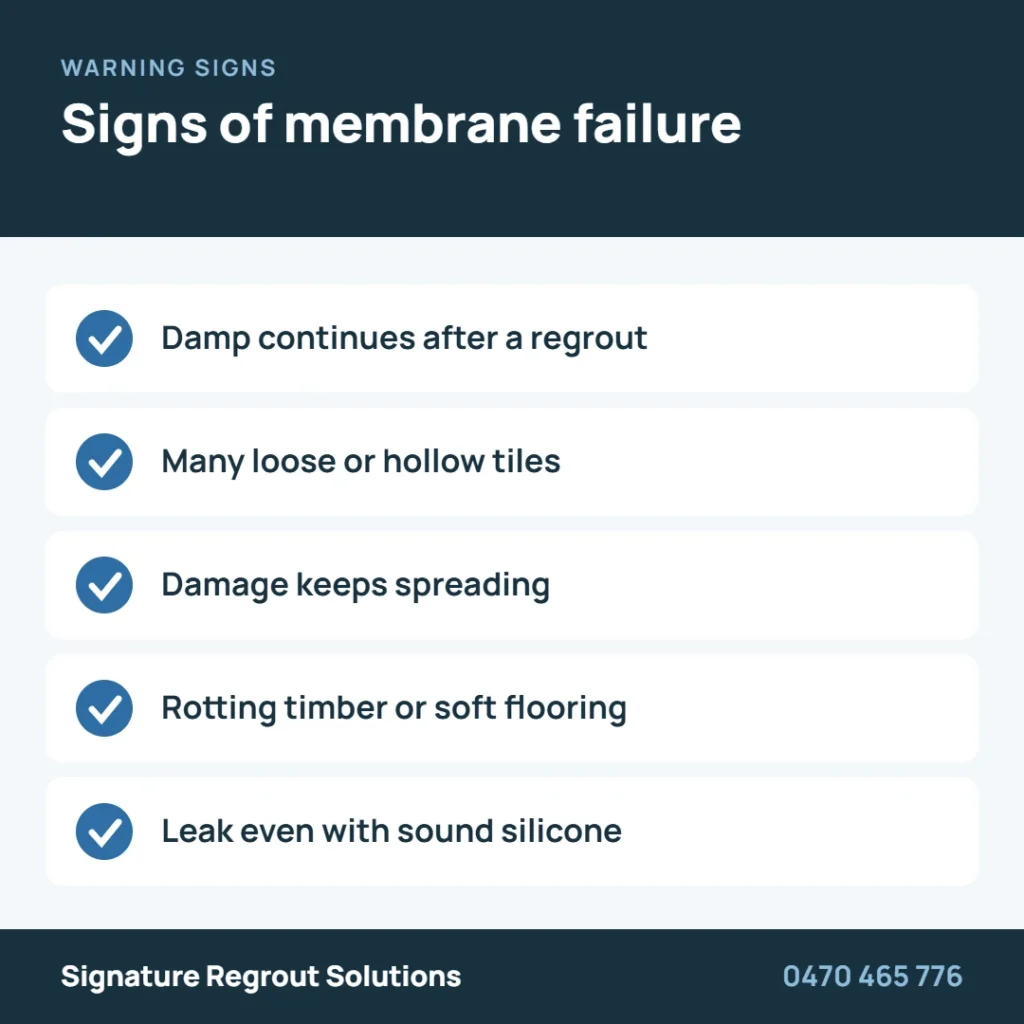
- Damp or swelling that continues after a proper regrout and reseal
- Many loose or hollow tiles across the floor
- Damage that keeps spreading over weeks
- Soft or rotting timber, flooring or skirting
- Leaks even when the silicone and grout look sound
Grout Leak or Membrane Failure?
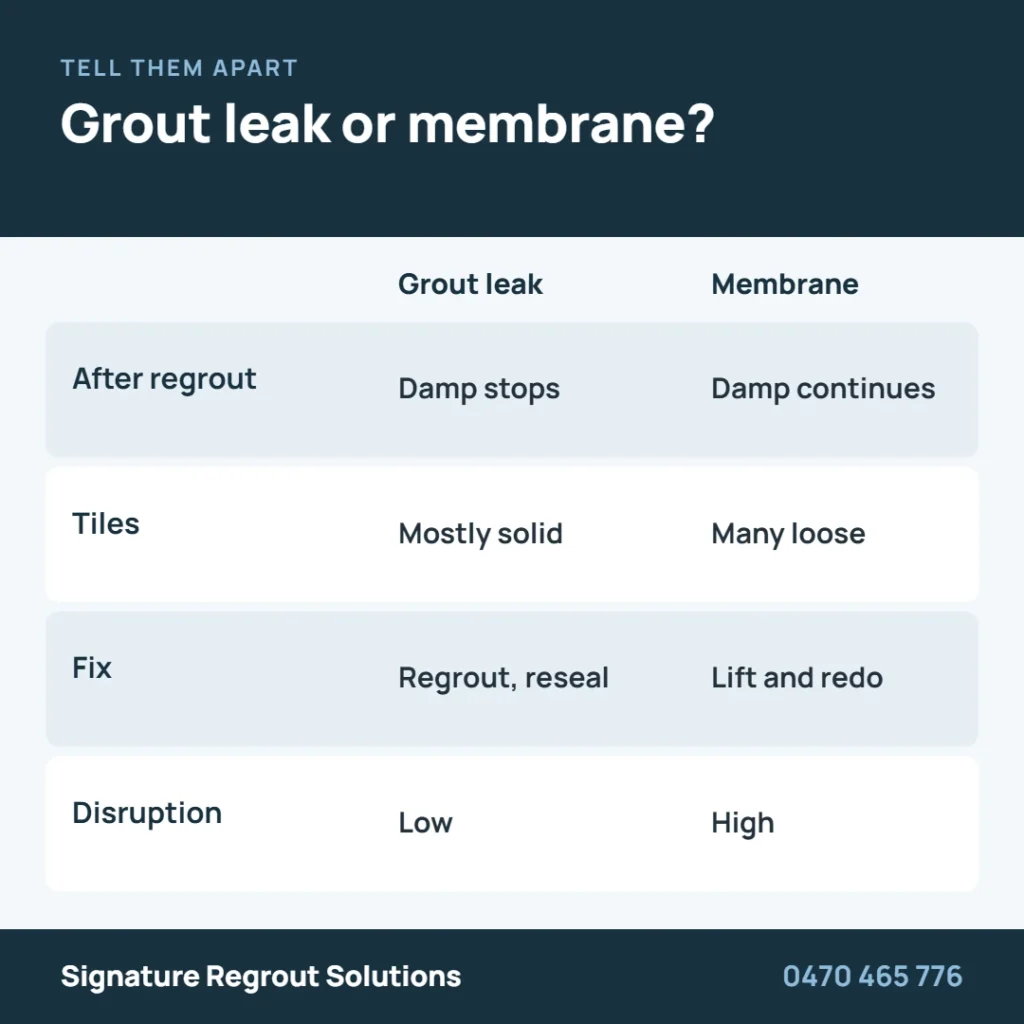
Most shower leaks are not membrane failures. They're caused by cracked grout and failed silicone letting water through, and those are fixed without removing tiles. That's why the sensible first step is to replace the grout and silicone and see if the damp stops. Our guide to the signs of a shower leak and our guide to shower waterproofing explain this in more detail.
If the damp stops, the waterproofing membrane was fine. If it doesn't, the membrane is the likely cause.
Want the cause of your leak found properly?
We'll check the grout, silicone and tiles first and give you a clear, honest quote.
What Fixing a Membrane Involves
Repairing a failed waterproofing membrane means lifting the tiles in the affected area, removing the old bedding, applying a new waterproofing membrane, letting it cure and then laying tiles again. It's a much bigger job than regrouting, with more time out of use. It's also work that has to be done to the right standard, so make sure whoever does it explains how it will be done and checked.
Why Checking the Grout First Saves Money
At Signature Regrout Solutions, we see plenty of showers where the owner was told the membrane had failed, when the real cause was a gap in the silicone at the base. Regrouting and resealing costs a fraction of a membrane repair. If it fixes the leak, you've saved a lot. If it doesn't, you've ruled out the most common cause and the bigger job is clearly justified. Our guide on how to fix a leaking shower without removing tiles explains the process.
How Long Before You Know?
After a regrout and reseal, give it a few weeks of normal use and watch the same spots: the skirting, the wall outside the shower and any ceiling below. Take photos on day one so you can compare. If marks fade and nothing new appears, the surface was the problem. If damp keeps spreading, it's time to look at the waterproofing membrane.
Protecting a Good Membrane
Keep the grout and silicone in good shape, so water runs to the drain instead of soaking through. Fix cracks and lifting silicone early. Keep the drain clear. A waterproofing membrane that isn't constantly wet lasts much longer.

Quick Questions
Can a waterproofing membrane be repaired without removing tiles?
Not properly. Surface products may help for a while, but a failed membrane is fixed underneath the tiles.
How long does a waterproofing membrane last?
It depends on the product, installation and how well the surface above is maintained.
Do I need a plumber or a regrouter?
For grout and silicone leaks, a regrouter. For pipe leaks, a plumber. For a failed membrane, a waterproofing specialist.
The Bottom Line
A failed waterproofing membrane is a big repair, but waterproofing membrane failure is less common than people think. Rule out the grout and silicone first, then decide.
Want to know if it's the membrane or the grout?
Send a photo on WhatsApp or give us a call. We'll help you find out.