
Bathroom water damage rarely starts with a flood. It starts slowly, from a cracked grout line, a gap in the silicone or a leaking fitting, and shows up somewhere you don't expect. The early signs of bathroom water damage are swollen skirting, bubbling paint, stains on the ceiling below, a musty smell and lifting floors near the bathroom.
Catching water damage early keeps the repair small. Here's what to look for and what to do first.
Spotted signs of water damage?
Send us photos on WhatsApp and we'll tell you what they point to.
The Early Signs of Water Damage
1. Swollen or soft skirting. Timber and MDF skirting soak up water and swell, especially near the shower door.
2. Bubbling or peeling paint. Paint lifts when moisture gets behind it, often on the wall next to or behind the shower.
3. Ceiling stains. In a double-storey home, a brown ring under the bathroom is a strong warning.
4. A musty smell. If the bathroom smells damp even when it's dry, water may be trapped under tiles or in the wall.
5. Lifting floors. Carpet, timber or laminate near the bathroom can lift or stain as water spreads.
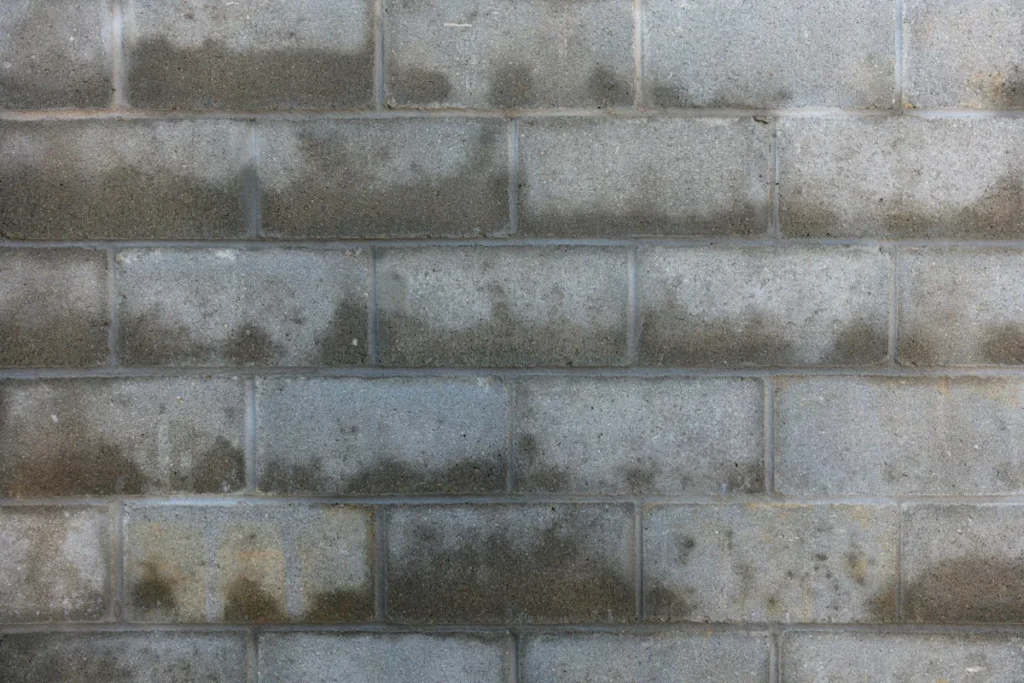
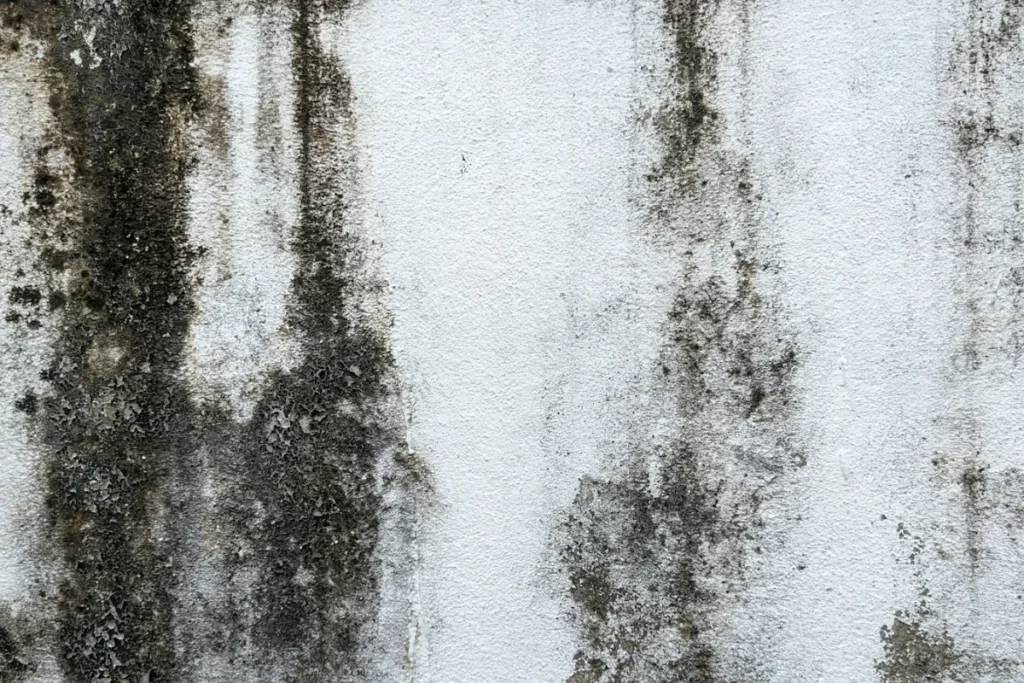
6. Mould in unusual places. Mould on walls outside the shower suggests moisture where there shouldn't be any.

What Causes Bathroom Water Damage?
The most common cause is water escaping through failed grout and silicone in the shower. Other causes include leaking taps and pipes, poor drainage in the shower, a failed waterproofing membrane, and condensation in poorly ventilated rooms. Our guide to the signs of a shower leak helps you narrow it down.
If damp appears even when the shower hasn't been used, a plumbing leak is more likely, and a plumber should check it.
What to Do First
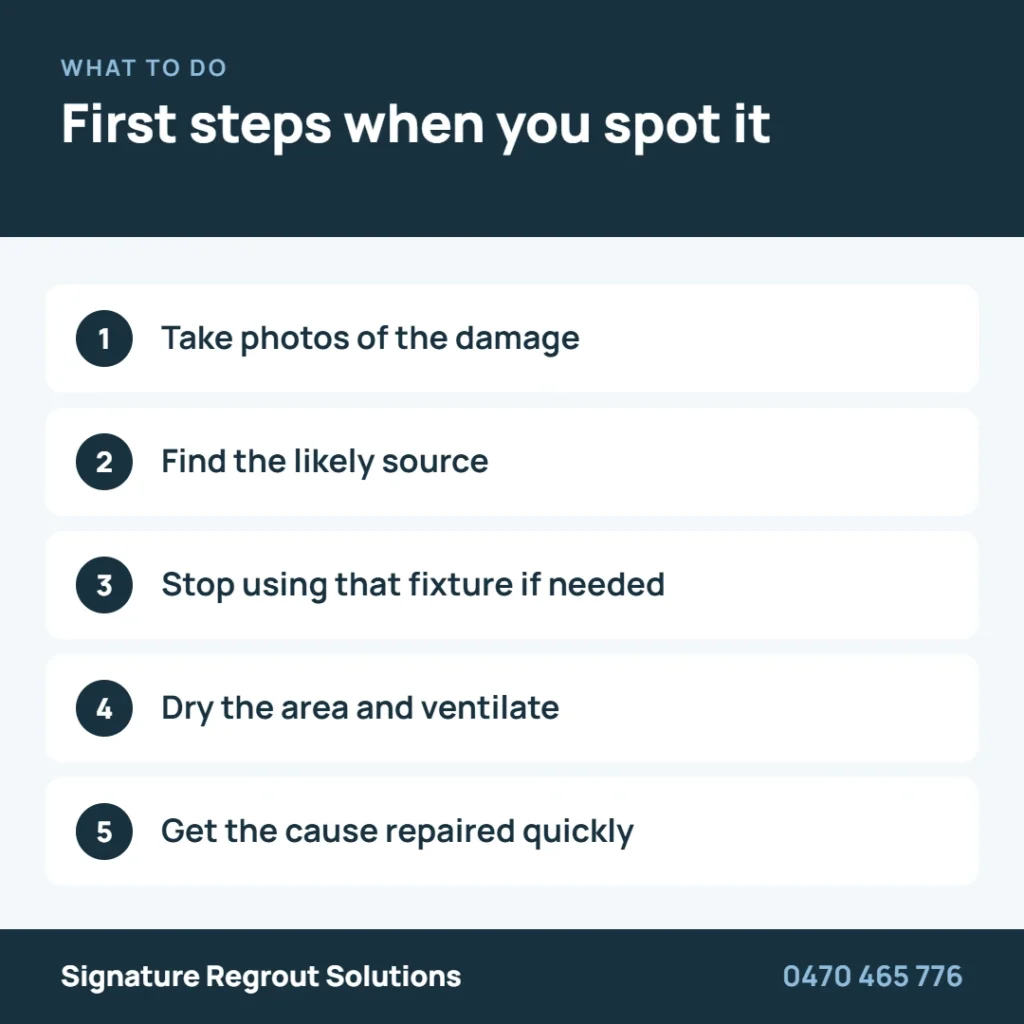
- Take photos. They help track changes and are useful for insurance.
- Find the likely source. Shower, bath, vanity or pipes.
- Stop using that fixture if water is clearly reaching another room.
- Dry and ventilate. Run fans and open windows to slow mould.
- Get the cause repaired. Drying out without fixing the source just delays the problem.
The Better Health Channel explains why damp, mouldy rooms are worth dealing with quickly.
Want the source of the water damage fixed?
We'll check the grout, silicone and tiles and give you a clear quote before any work starts.
Can Water Damage Be Fixed Without a Renovation?
Often, yes, if it's caught early and the cause is the grout and silicone. Regrouting and resealing stops the water at the source. Our guide on how to fix a leaking shower without removing tiles explains when that works. Damaged skirting or plaster outside the bathroom may need a separate repair once it has dried out.
If water damage has reached the structure, or the membrane has failed, a bigger repair is needed. The Building and Plumbing Commission explains how wet areas are meant to be waterproofed.
Why Small Signs Matter
Water damage spreads quietly. Timber framing and particleboard flooring can hold moisture for a long time, and mould can grow out of sight. The longer it goes, the more materials are affected and the bigger the bill. A swollen skirting board today can mean a new floor later.
At Signature Regrout Solutions, most of the water damage cases we see started with grout and silicone that had been failing for months. Fixing them early is almost always the cheaper path.
Renters and Landlords
If you rent, report any signs to your landlord or property manager in writing as soon as you notice them, with photos. Early reporting protects you and makes the repair simpler. For landlords, a quick regrout and reseal between tenants is far cheaper than repairing floors and walls later.
Preventing Water Damage
- Squeegee the shower and wipe the base after use.
- Replace silicone as soon as it lifts.
- Fix cracked grout before it spreads.
- Run the exhaust fan during and after showers.
- Check under the vanity for drips every few months.

Quick Questions
Is bathroom water damage covered by insurance?
It depends on your policy and the cause. Gradual leaks are often treated differently from sudden damage.
How do I know if water damage is old or new?
Rings of staining, crumbling plaster and strong smells usually point to a long-running leak.
Can I just paint over water stains?
Not until the source is fixed and the area is dry, or the stain will come back.
The Bottom Line
The early signs of water damage are easy to miss but worth acting on. Find the source, fix it properly, and the damage stops spreading.
Worried about water damage in your bathroom?
Send a photo on WhatsApp or give us a call. We'll help you find the cause.