
Most people only remember to seal grout once it already looks dirty. Cement grout should be sealed once it has fully cured, then resealed whenever water stops beading on the surface. In busy showers and floors that's more often than on dry walls. Epoxy grout doesn't need sealing at all.
Here's how to tell when to seal grout, how to do it properly and where it matters most.
Not sure if your grout needs sealing?
Send us a photo on WhatsApp and we'll tell you if sealing will help or if it needs more.
Why Seal Grout at All?
Cement grout is porous. Sealer fills the tiny pores so water, soap and dirt sit on top instead of soaking in. That keeps the colour even, slows mould and makes cleaning easier. It doesn't make grout waterproof, but it buys a lot of time.
If grout has never been sealed, it usually darkens and stains much faster, especially on shower floors and kitchen floors.
The Water Drop Test
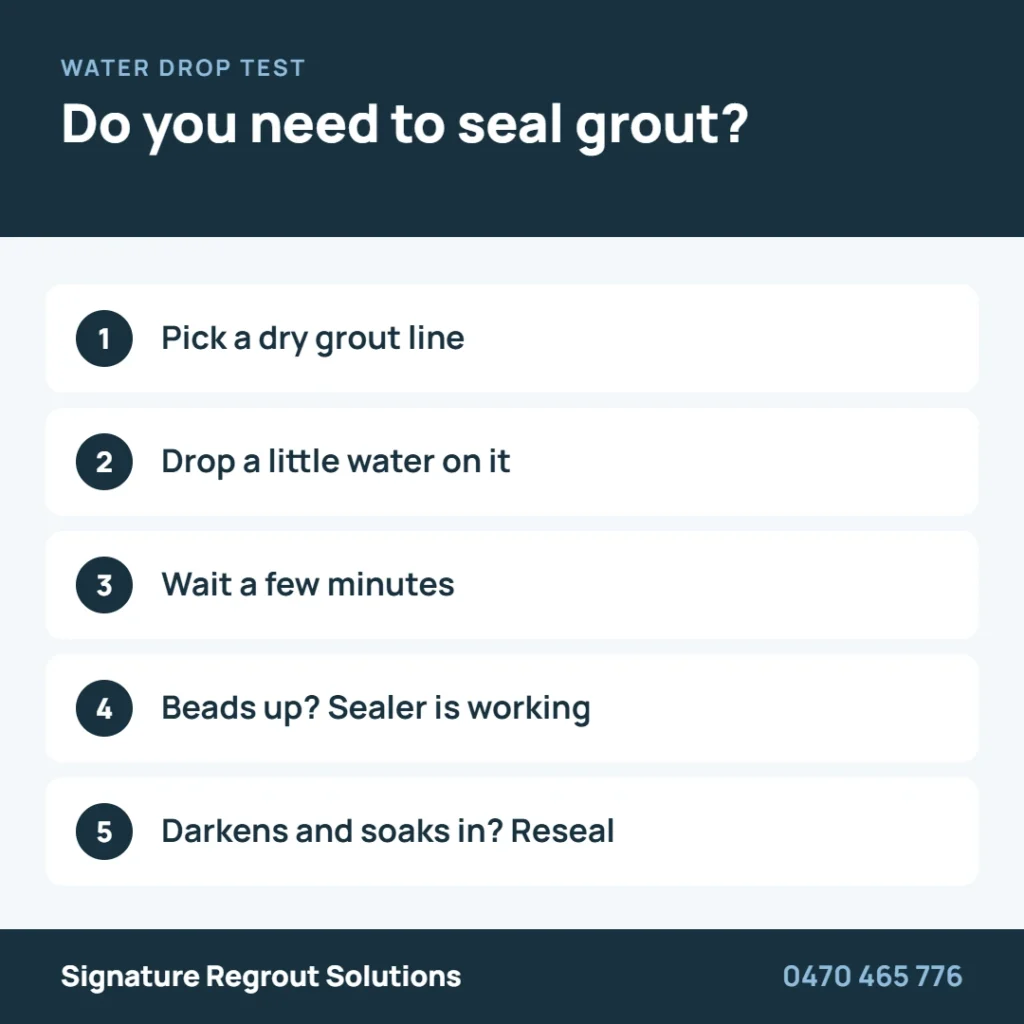
The easiest way to know when to seal grout is to test it:
- Pick a clean, dry grout line.
- Drop a little water on it.
- Wait a few minutes.
- If the water beads up, the sealer is still working.
- If it darkens and soaks in, it's time to seal grout again.
Test in a few places. The shower floor usually needs resealing before the walls do.
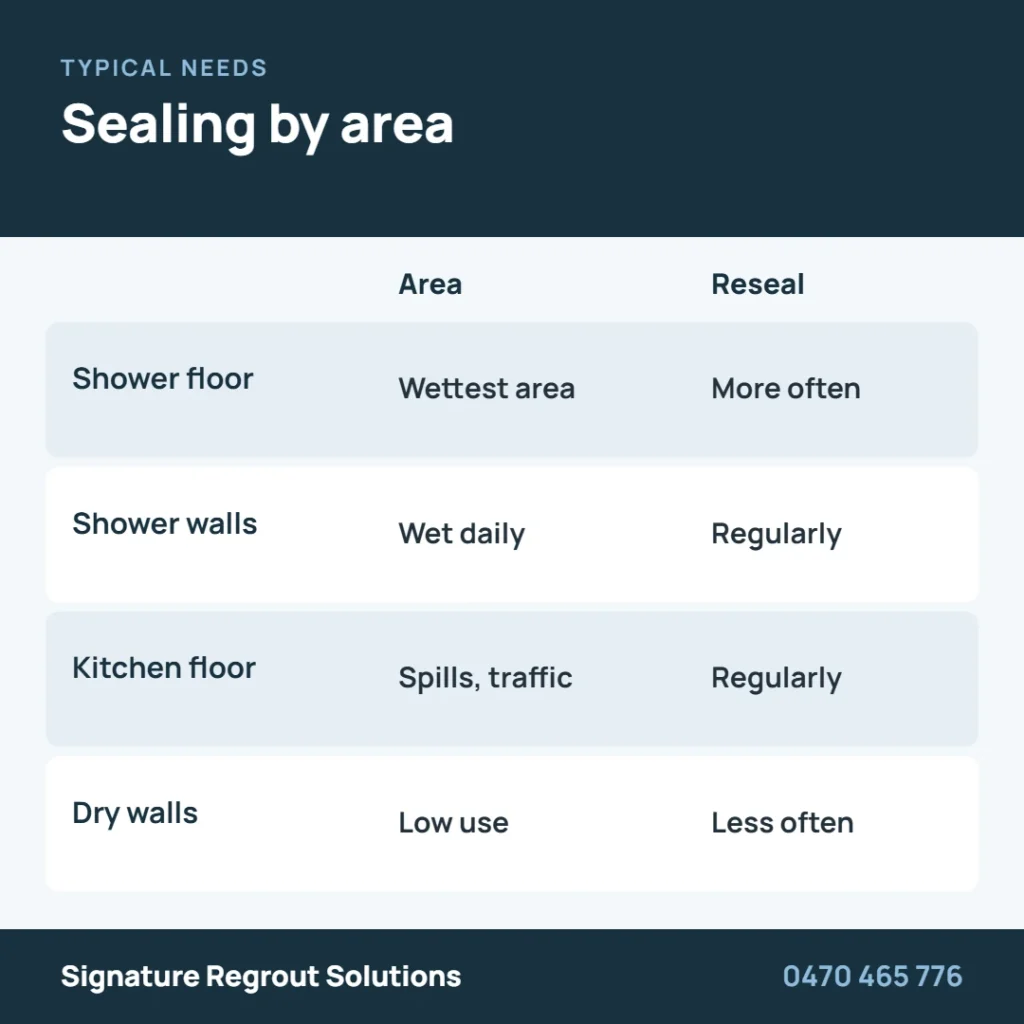
How Often to Seal Grout by Area
| Area | How often |
|---|---|
| Shower floor | Most often |
| Shower walls | Regularly |
| Kitchen and laundry floors | Regularly |
| Dry walls | Less often |
The exact timing depends on the sealer, how often the area is cleaned and the cleaning products used. Strong acids and bleach strip sealer faster.

Want your grout cleaned and sealed?
We'll check whether your grout is sound and give you a clear quote to clean and seal it.
Choosing a Sealer
There are two main types. A penetrating sealer soaks into the grout and protects it from the inside without changing how it looks much. A colour sealer coats the surface and gives the grout a new, even colour. Penetrating sealers are the usual choice to seal grout in showers and on floors. Colour sealers suit grout that is sound but patchy.
Read the label before you seal grout around natural stone, because some sealers aren't suitable. And if you're not sure what's on your grout now, test a small hidden area first.
Signs It's Time to Seal Grout Again
Apart from the water test, watch for grout that darkens quickly after a shower and takes a long time to dry. Stains that used to wipe off and now don't are another clue. When you notice those, it's time to seal grout again before the dirt sets in.
How to Seal Grout Properly
- Clean first. Sealing over dirt locks the dirt in.
- Let it dry. Grout should be completely dry, ideally overnight.
- Apply carefully. Use a small brush or applicator along the grout lines.
- Wipe the tiles. Remove sealer from glazed tiles before it dries.
- Let it cure. Keep water off for the time on the label.
When You Shouldn't Bother to Seal Grout
Don't seal grout that is cracked, crumbly or full of deep mould. Sealer won't fix broken grout, and it can trap mould underneath. That grout needs replacing. Our guide on whether to clean or regrout has a quick test, and our grout restoration guide explains when a clean and seal is the right fix.
What About Epoxy Grout?
Epoxy grout doesn't need sealing. It barely absorbs water to begin with, which is one of the main reasons we recommend it for showers. Our guide to epoxy grout vs regular grout compares the two.
Sealing and Mould
Sealing slows mould, but ventilation matters more. A sealed floor in a bathroom that never dries will still grow mould on the surface. The Better Health Channel explains why damp rooms encourage it. Run the exhaust fan, squeegee after showers and keep the room aired out.
At Signature Regrout Solutions, we seal cement grout as part of a regrout once it has cured, and we'll show you how to check when it's due again.
Quick Questions
Do I need to seal new grout?
New cement grout should be sealed once it has fully cured. Ask your installer for the timing.
Can I seal grout that's already stained?
Clean it first. Sealing over stains locks them in.
Does sealing change the grout colour?
A clear sealer can darken it slightly. A colour sealer changes the colour on purpose.
The Bottom Line
Seal grout once it cures, test it with a drop of water, and reseal when it stops beading. If it's cracked or crumbling, replace it instead.
Want help to seal grout properly?
Send a photo on WhatsApp or give us a call for an honest answer.