

If the grout in your shower corners keeps cracking no matter how often it's patched, there's a good chance the wrong material is in there. Shower corners should be filled with flexible silicone, not grout. Grout goes between tiles on flat surfaces, and silicone goes wherever two surfaces meet.
It's one of the most common mistakes we see in Melbourne bathrooms, and one of the easiest to fix. It also explains why the same crack keeps coming back after every patch-up.
Grout keeps cracking in your shower corners?
Send us a photo on WhatsApp. We'll tell you if it needs silicone instead.
Why Grout Fails in Shower Corners
Grout is rigid. Shower corners move. Every time the house warms up, cools down or settles, the walls and floor shift a tiny amount. In the middle of a wall that movement is spread out, but in shower corners it's concentrated in one joint.
Rigid grout can't stretch, so it cracks. Once it cracks, water gets in behind the tiles. That's why grouted shower corners are often where mould and leaks start. Our guide to why grout cracking happens explains the other causes.
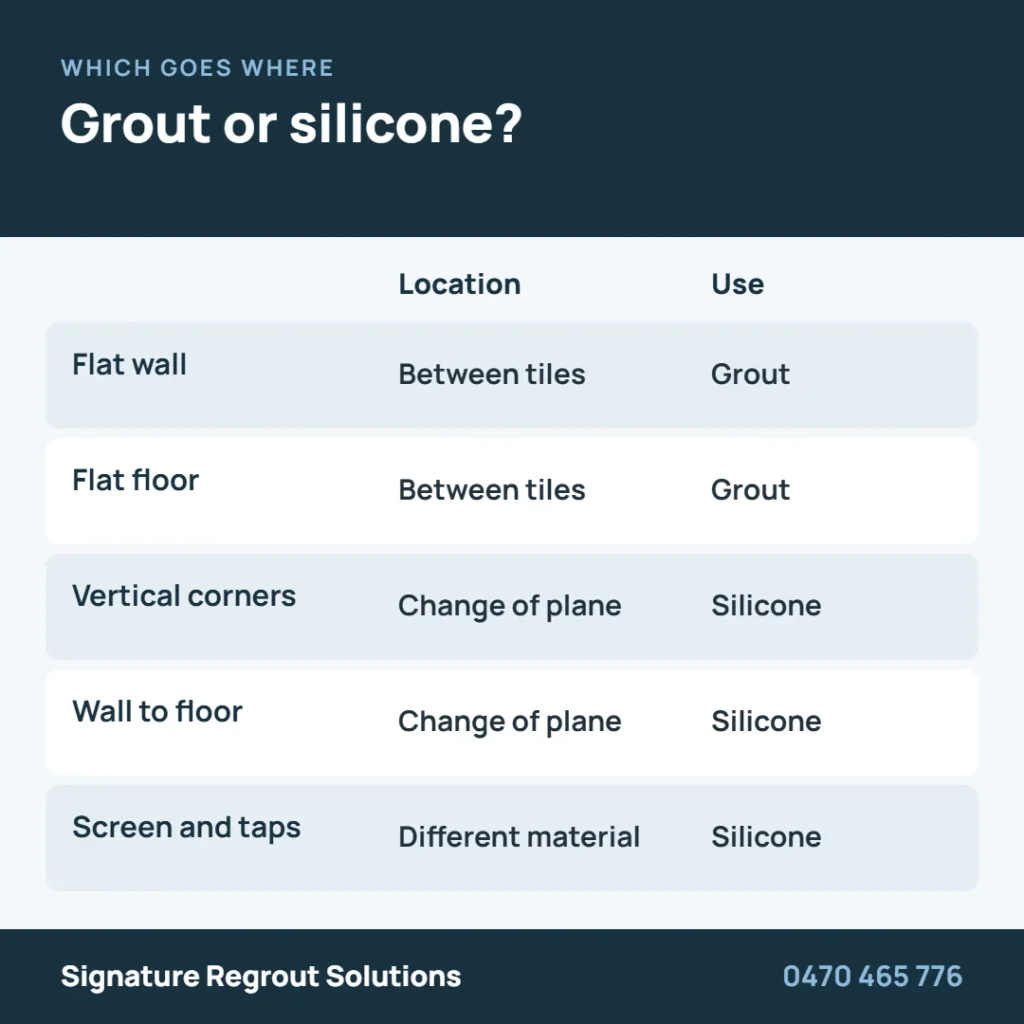
Where Grout Belongs and Where Silicone Belongs
| Location | Grout or silicone? |
|---|---|
| Between tiles on a flat wall | Grout |
| Between tiles on a flat floor | Grout |
| Vertical shower corners | Silicone |
| Where the wall meets the floor | Silicone |
| Around the screen and frame | Silicone |
| Around taps and outlets | Silicone |
The simple rule: if two surfaces change direction or two different materials meet, it's a movement joint, and movement joints get silicone.
Is Silicone Just a Cheaper Shortcut?
No. Silicone is the correct material for movement joints. Good bathroom silicone stays flexible for years, so it moves with the building without cracking.
The trade-off is that silicone doesn't last forever. It can collect mould, especially in a poorly ventilated bathroom, and eventually needs replacing. The Better Health Channel explains why damp rooms encourage mould. Our silicone replacement page shows what a proper reseal involves.

What If My Shower Corners Already Have Grout?
The grout should be cut out and the corners siliconed. Running silicone over cracked grout doesn't work, because silicone won't stick properly to broken grout.
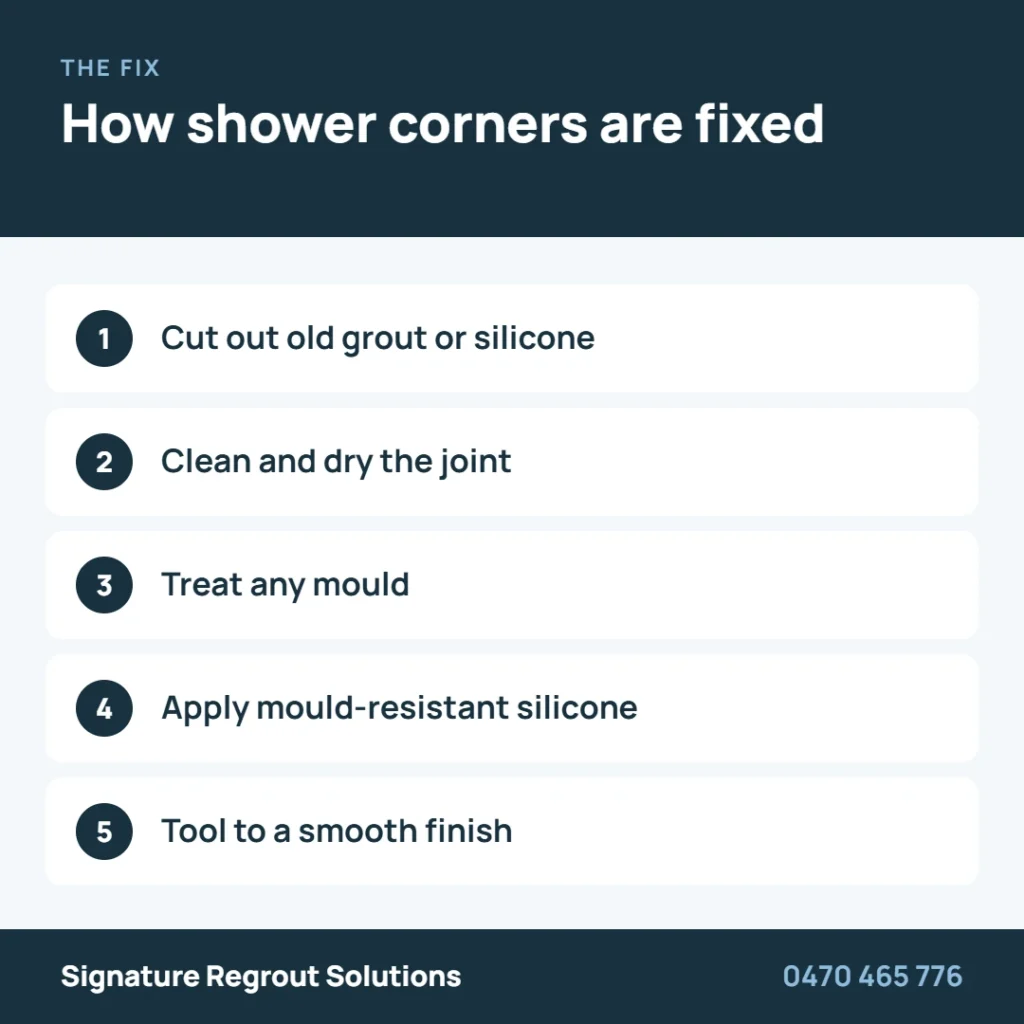
When we fix shower corners at Signature Regrout Solutions, we cut out the old grout or silicone completely, clean and dry the joint, treat any mould, apply a mould-resistant bathroom silicone and tool it to a smooth finish.
Want your shower corners done properly?
We'll check the grout and silicone and give you a clear quote before any work starts.
Looking After Silicone in Shower Corners
Silicone lasts much longer with a little care. Squeegee the walls after showering so water doesn't sit along the joint. Run the exhaust fan until the room is dry. Clean the corners gently with a soft brush and a mild cleaner rather than scrubbing hard, which can lift the edges.
Check the shower corners every few months. A small gap or a bit of lifting at the bottom is easy to fix early. Left alone, water gets in behind the silicone and mould starts growing where you can't clean it.
Can the Silicone Match the Grout?
Yes, in most cases. Silicone comes in a range of colours, so it can be matched closely to white, grey or darker grout. That way the shower corners look consistent with the rest of the tiling.
Signs Your Shower Corners Need Attention
- Cracks running down a vertical corner
- Silicone that's peeling or has gaps behind it
- Black mould that comes back however often you clean
- Grout missing where the wall meets the floor
- Water marks on the other side of the wall
If you're seeing stains or swollen skirting, read our guide to the signs of a shower leak as well.
Why This Mistake Is So Common
Grouting everything is quicker, and on the day it looks neat. The problem only shows weeks or months later. Some older bathrooms were also built before flexible sealants were widely used in corners, so the original grout has simply reached the end of its life. Either way, the fix is the same.

Quick Questions
How long does silicone last in a shower?
It depends on ventilation and cleaning. Replace it when it starts peeling, cracking or holding mould.
Can I put new silicone over old silicone?
No. New silicone won't bond to old silicone, so the old silicone has to come out completely.
Should the shower screen be grouted or siliconed?
Siliconed. The frame is a different material and needs a flexible seal.
The Bottom Line
Grout for flat surfaces, silicone for shower corners and anywhere surfaces meet. Get that right and the corners stop cracking.
Shower corners cracking again?
Send a photo on WhatsApp or give us a call. We'll fix them so they stay fixed.